Microesferas de vidro refletoras AASHTO M247
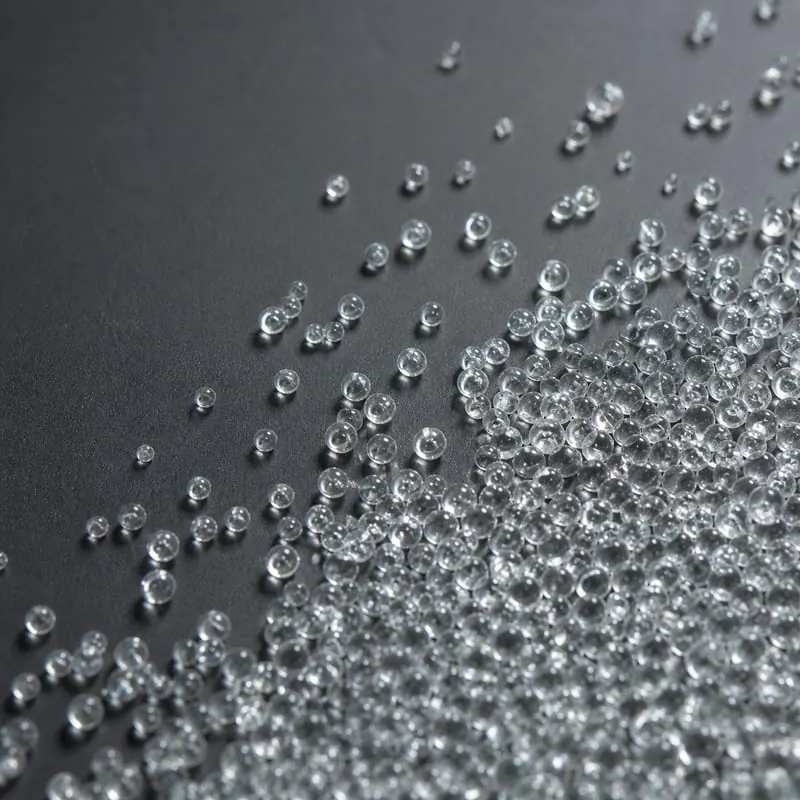
A AASHTO M247 é a especificação norte-americana para microesferas de aplicação superficial — o documento utilizado nas compras dos State DOTs e a referência às “microesferas segundo a norma dos EUA” citada em concursos nas Filipinas, no Médio Oriente e na América Latina. Este produto é fabricado segundo os requisitos da AASHTO M247 Type 1 / 2 / 3, com tratamentos resistente à humidade, de flutuação ou de aderência mediante pedido.
- NOME DO PRODUTOMicroesferas de vidro refletoras AASHTO M247
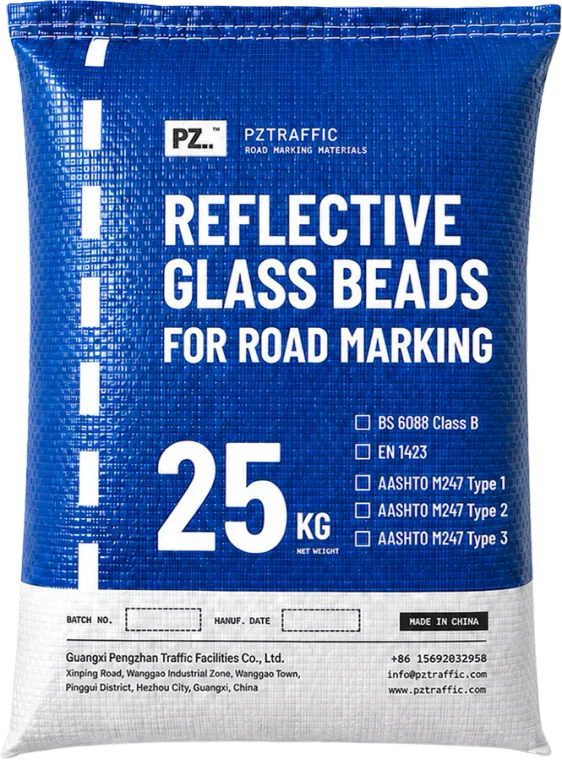
- EMBALAGEM25 kg / saco
- CLASSESAASHTO M247 Type 1 / 2 / 3 (aplicação superficial)
- MATERIALVidro transparente e incolor — liso, esférico
- ÍNDICE DE REFRAÇÃO1.50 – 1.55
- TRATAMENTO SUPERFICIALResistente à humidade / flutuação / aderência — especificado na encomenda
- ORIGEMChina
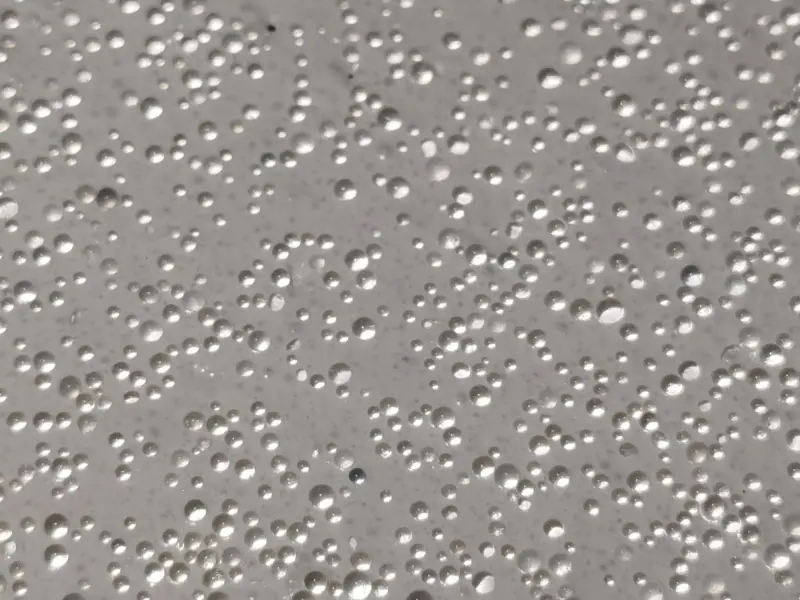
- APLICAÇÃOAplicadas sobre a marcação ainda quente
O que a AASHTO M247 exige
A AASHTO M 247 abrange microesferas de vidro aplicadas ou pulverizadas sobre marcações de pavimento para lhes conferir retrorreflexão. As tabelas abaixo reproduzem a M 247-13 (2022), versão ainda citada na maioria dos concursos em circulação. Em 2026, a AASHTO publicou a revisão técnica M 247-26 — por isso, indique o ano da versão no contrato, em vez de escrever “M 247 mais recente”; apresentaremos proposta e certificação segundo o texto citado no seu concurso.
One standard, six sizes — and a version trap
The current M247 grades beads purely by size, from fine to very coarse. Type 1 is the global workhorse; Type 3 and up are the “big beads” engineered for wet-night visibility:
| Type | Size band | Role |
|---|---|---|
| Type 0 | 180 – 600 μm | Uniform fine gradation — the old Type 2, renamed |
| Type 1 | 150 – 850 μm | Standard drop-on gradation — the market mainstay |
| Type 2 | ≈ 0.6 – 1.4 mm | Modified gradation, one step coarser than Type 1 |
| Type 3 | ≈ 0.7 – 1.7 mm | Entry big bead for wet-night reflectivity |
| Type 4 / 5 | up to ≈ 2.36 mm | Larger wet-night beads for very thick markings |
The trap: the original M 247-81 had only two types, and its “Type 2” was a fine uniform bead — what the current standard calls Type 0. Old tenders in Southeast Asia and the Middle East still copy the 1981 wording, so “M247 Type 2” can mean a 180–600 μm fine bead or a 0.6–1.4 mm coarse bead depending on the vintage of the document. Whenever Type 2 appears in a tender, we exchange full gradation tables and lock the numbers into the contract before production.
Type 1 gradation — M 247-13, Table 1
| Sieve size | US sieve no. | Passing, % by mass |
|---|---|---|
| 850 μm | No. 20 | 100 |
| 600 μm | No. 30 | 75 – 95 |
| 300 μm | No. 50 | 15 – 35 |
| 150 μm | No. 100 | 0 – 5 |
The working range is 150–850 μm with the bulk at 300–600 μm — essentially the same size class as BS 6088 Class B (180–850 μm): they are the American and British write-ups of the same drop-on bead, and one grading line covers both. One reading note: M247 states cumulative passing per sieve, while BS 6088 states retained per band — the two formats give completely different numbers for the same product, so check which convention a datasheet uses before comparing.
Type 2 gradation — one step coarser
| Sieve size | US sieve no. | Passing, % by mass |
|---|---|---|
| 1.40 mm | No. 14 | 100 |
| 1.18 mm | No. 16 | 95 – 100 |
| 1.00 mm | No. 18 | 80 – 95 |
| 850 μm | No. 20 | 15 – 45 |
| 710 μm | No. 25 | 0 – 15 |
| 600 μm | No. 30 | 0 – 5 |
Type 2 sits between the standard bead and the big beads — mostly 0.85–1.18 mm. It buys extra dry-night brightness and a first step of wet-film performance on medium-build markings, or serves as the transition size in a double-drop system. Remember this is the current Type 2: if your tender dates from the M 247-81 era, its “Type 2” means the fine Type 0 bead instead — see the version trap above.
Type 3 gradation — the wet-night big bead
| Sieve size | US sieve no. | Passing, % by mass |
|---|---|---|
| 1.70 mm | No. 12 | 100 |
| 1.40 mm | No. 14 | 95 – 100 |
| 1.18 mm | No. 16 | 80 – 95 |
| 1.00 mm | No. 18 | 10 – 40 |
| 850 μm | No. 20 | 0 – 5 |
| 710 μm | No. 25 | 0 – 2 |
On a rainy night a film of water drowns standard beads and the line goes dark. Type 3 beads — mostly 1.0–1.4 mm — are big enough to stand proud of that water film and keep reflecting. The typical use is a double-drop: a first pass of Type 3 for wet-night performance, a second pass of Type 1 for dry initial brightness. Big beads need a thick, high-build marking to hold them — which is why US state specs pair Type 3+ with adherence coatings and thick thermoplastic or structured lines. As working figures from industry practice (not clauses of M247): hot-applied thermoplastic takes a drop-on rate around 400–500 g/m², with the bead embedded 50–60% of its diameter for best return.
Bead quality — roundness, glass, refractive index
| Property | M 247-13 requirement |
|---|---|
| True spheres, minimum | ≥ 70% (ASTM D1155) |
| Refractive index | 1.50 – 1.55 (liquid-immersion method, 25 °C) |
| Appearance | Transparent, clean, colourless glass — smooth and spherical, free from milkiness, pits or excessive air bubbles |
| Toxicity | Must not exhibit the hazardous-waste toxicity characteristic of EPA 40 CFR 261.24 (TCLP leaching) |
Two practical notes. First, although the standard’s floor is 70% true spheres, US state qualified-product lists and most buyers work to ≥ 80% — specify the roundness you need and it goes on the COA. Second, many State DOTs add total heavy-metal limits on top of the TCLP clause — arsenic, lead and antimony each ≤ 200 ppm is the common ceiling (New Jersey holds arsenic to ≤ 100 ppm), tested by EPA 3052 digestion + 6010 ICP. If your project cites these, ask for the As / Pb / Sb totals with your COA.
Coatings, and how to order
M247 treats surface treatments as buyer options, alone or combined, and requires that a specified coating be positively detectable on the delivered beads:
| Coating | What it does |
|---|---|
| Moisture-proof | Keeps beads free-flowing through the dispenser in humid transit and storage — no clumping, no blocked guns |
| Flotation | Controls how deep the bead sits in the wet coating, for a uniform embedment depth |
| Adherence (silane) | Bonds the bead chemically to the paint or thermoplastic — resists bead loss, standard practice for Type 3+ big beads |
A clean contract clause names the version, type and coatings:
“Glass beads shall conform to AASHTO M 247-13 (2022), Type 1, with moisture-resistant and adherence coating.”
For new 2026 contracts referencing the revision, write “AASHTO M 247-26, Type 1” — either way, name the year.
M247, BS 6088B, EN 1423 — which to cite
| AASHTO M247 | BS 6088:1981 Class B | BS EN 1423:2012 | |
|---|---|---|---|
| Status | Current US standard — M 247-26 since 2026 | Superseded in UK/EU, still the global trade code | Current UK/EU standard (CE/UKCA route) |
| Gradation | Fixed tables, Type 0 – 5 (incl. wet-night big beads) | One fixed table (180 – 850 μm) | Declared by the manufacturer |
| Roundness | ≥ 70% (market practice ≥ 80%) | ≥ 80% | Declared per its own annex |
| Refractive index | 1.50 – 1.55 | ≥ 1.50, one class | Three classes: ≥ 1.5 / ≥ 1.7 / ≥ 1.9 |
| Heavy metals | TCLP clause + state totals (≤ 100 – 200 ppm) | No ppm clause (Na₂S test screens lead glass) | As / Pb / Sb each ≤ 200 ppm |
M247 Type 1 and BS 6088 Class B overlap so closely that the same grading line supplies both — the difference is paperwork, not product. What M247 alone offers is the built-in big-bead series: if your project needs wet-night performance, Type 3 is the entry point. Tell us which code and which type your tender cites and we quote against that text.
Da nossa linha ao seu porto
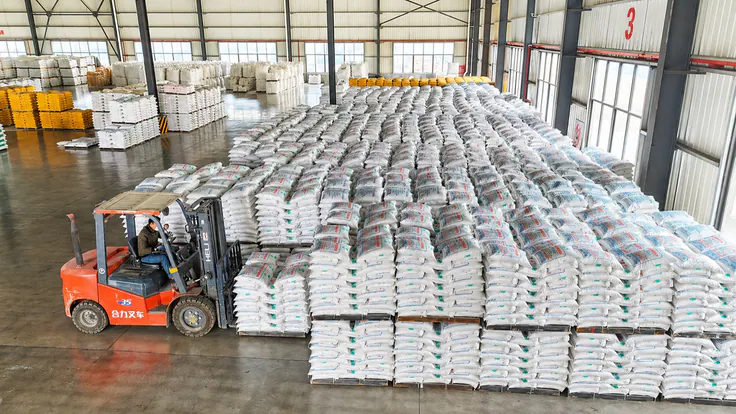
- Sacos de 25 kg herméticos à humidade — em tecido de PP ou papel com revestimento interior, conforme a cláusula de embalagem resistente à humidade da norma; 40–48 sacos por palete, big bags de 1 t mediante pedido.
- Marcados segundo a norma — fabricante, marca comercial, AASHTO M 247 com número do Type, peso líquido, número de lote e data de produção em cada saco, em conformidade com o COA do lote.
- Cada lote é aprovado pelo laboratório interno — distribuição granulométrica em quatro peneiros, contagem de esfericidade e inspeção visual — com o relatório de ensaio certificado pelo fabricante exigido pela M247.
- Expedição a partir do Porto de Qinzhou — Sudeste Asiático em 5–15 dias; África e Américas em cerca de 30 dias, em média. Condições comerciais EXW / FOB / CIF.
- Carregadas juntamente com a sua encomenda de tinta — microesferas e termoplástico no mesmo contentor, uma expedição, um conjunto de documentos.

Combina com
Perguntas de compra
Q-01Which type do I need — Type 1, 2 or 3?
Type 1 is the standard drop-on bead for ordinary paint and thermoplastic lines — if the tender just says “M247 beads”, it almost always means Type 1. Type 3 is the big bead for wet-night reflectivity, used as the first pass of a double-drop on thick or structured markings. Type 2 sits between them. If you are unsure, send us the marking type and film thickness and we recommend a gradation.
Q-02Our tender says “M247 Type 2” — what will I get?
It depends on the vintage of the document. In the original M 247-81 — still copied by many older tenders — Type 2 was a fine 180–600 μm uniform bead, which the current standard renamed Type 0. In the current six-type system, Type 2 is a coarse bead one step above Type 1. The two are completely different products, so for any Type 2 order we exchange full gradation tables and write the sieve numbers into the contract before production.
Q-03Do you supply coated beads?
Yes — moisture-proof coating for free flow in humid climates, flotation coating for controlled embedment, and silane adherence coating for bead retention, alone or combined as dual coatings. State the coating combination in your order. Uncoated beads are also available — AASHTO M249 thermoplastic, for example, requires its premix beads uncoated.
Q-04Which trade terms do you support?
We can provide EXW, FOB, CIF services, etc.
Receba um orçamento em 24 horas
Preencha o formulário abaixo e entraremos em contacto consigo.