Sơn Kẻ Đường Nhiệt Dẻo JT/T 280
JT/T 280 là quy cách của ngành giao thông Trung Quốc dành cho sơn kẻ mặt đường — văn bản đứng sau mạng lưới đường cao tốc lớn nhất thế giới, được ban hành lại năm 2022 với ngưỡng bắt buộc cao hơn: sơn nóng chảy nay phải chứa tối thiểu 30% hạt bi thủy tinh trộn sẵn. Đây là tiêu chuẩn gắn liền với kinh nghiệm sản xuất của chúng tôi và được các dự án do nhà thầu Trung Quốc thực hiện trên toàn cầu viện dẫn. Sản phẩm này được sản xuất để đáp ứng JT/T 280-2022, loại nóng chảy phản quang.
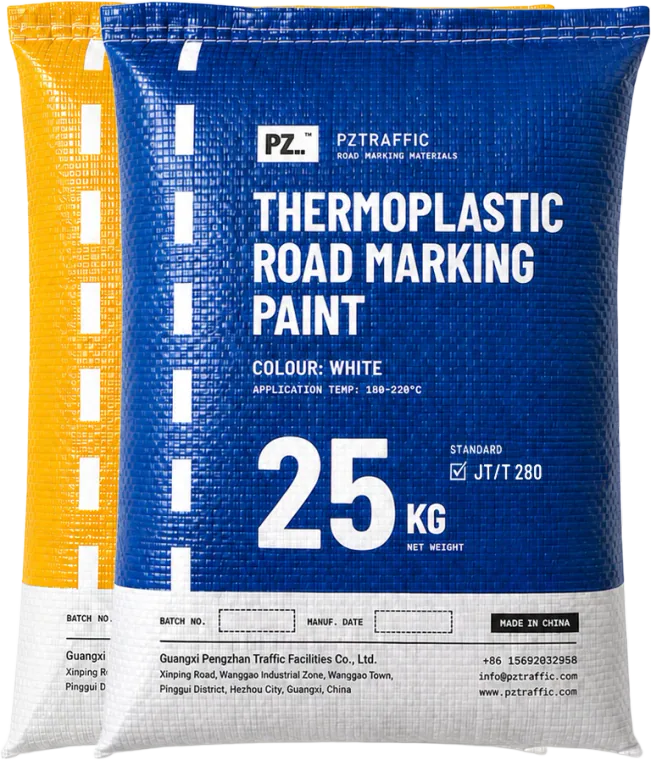
- TÊN SẢN PHẨMSơn kẻ đường nhiệt dẻo JT/T 280
- TIÊU CHUẨNJT/T 280-2022 — loại nóng chảy, phản quang
- QUY CÁCH ĐÓNG GÓI25 kg / bao
- HẠT BI THỦY TINHTrộn sẵn ≥ 30% — ngưỡng bắt buộc của phiên bản 2022
- MÀU SẮCTrắng / vàng · 10 màu được quy định trong tiêu chuẩn
- ĐIỂM HÓA MỀM100 – 140 °C
- THỜI GIAN KHÔ KHÔNG DÍNH BÁNH XE≤ 5 phút
- XUẤT XỨQuảng Tây, Trung Quốc
Yêu Cầu Của JT/T 280-2022
JT/T 280 do Bộ Giao thông Vận tải Trung Quốc ban hành và bao quát mọi nhóm sơn kẻ đường — nóng chảy, dung môi, hai thành phần và gốc nước. Phiên bản 2022 thay thế JT/T 280-2004 vào ngày 9 tháng 12 năm 2022. Toàn bộ nội dung dưới đây trích văn bản năm 2022 cho nhóm nóng chảy, cũng chính là loại của sản phẩm này.
The 2022 edition raised the floor
Under the 2004 edition a factory could sell an “ordinary” hot-melt with no beads in the mix. The 2022 revision deleted that product outright — hot-melt now exists in exactly two types, and both must carry premix glass beads:
| Type | Premix glass beads | Form |
|---|---|---|
| Reflective (反光型) | ≥ 30% by mass, roundness per GB/T 24722 | Flat lines — this product |
| Raised / vibration (突起型) | ≥ 30% by mass | Profiled lines that rumble under the wheel |
The practical consequence: a “JT/T 280 hot-melt” offer with 10% or 20% beads — or none — is being quoted against a standard that no longer exists. If a tender written before 2023 still cites the 2004 edition, ask which text governs before comparing prices; the bead content alone moves the cost significantly.
Performance requirements — Table 3, reflective type
| Property | Requirement |
|---|---|
| Density | 1.8 – 2.3 g/cm³ |
| Softening point | 100 – 140 °C |
| No-track drying time | ≤ 5 min |
| Compressive strength | ≥ 12.0 MPa at 23 °C · ≥ 2.0 MPa at 60 °C |
| Abrasion loss | ≤ 80 mg |
| Low-temperature crack resistance | 3 cycles of −10 °C (4 h) / room temp (4 h) — no cracks |
| Heating stability | 4 h held at 200 ± 10 °C — no yellowing, scorching or clumping; colour stays within the standard’s chromaticity boxes |
| Fluidity | 90 ± 5 mm²/g |
| Thermal deformation resistance | ≥ 90% (60 °C, 50 kPa, 1 h) |
| Total organic content | ≥ 19.0% |
| Luminance factor | White ≥ 0.80 · yellow ≥ 0.48 (Table 2 coordinates) |
| Harmful substances | Per JT/T 1326-2020, the marking-material limits standard |
Two of these are worth reading twice. The double compressive test — cold and at 60 °C — is aimed at hot climates, where a line that is hard in the lab can still track and deform under summer traffic. And the 200 °C heating-stability hold simulates the kettle: four hours at working temperature without scorching or drifting off colour is what separates a line that stays white from one that yellows the day it is laid.
The recipe’s inputs are specified too
Where BS 3262 and AASHTO M249 mostly test the finished powder, JT/T 280-2022 goes a level deeper and writes normative specs for the raw materials themselves — Appendix A for the resin, Appendix B for the polyethylene wax:
| Input | Key requirements (2022 text) |
|---|---|
| Resin — C5 petroleum or rosin | Softening point ≥ 100 °C · Gardner colour ≤ 5.0 · melt viscosity ≤ 200 mPa·s at 200 °C · ash ≤ 0.1% · 4 h at 200 °C without darkening |
| Polyethylene wax | Softening point ≥ 100 °C · Gardner colour ≤ 5.0 · melt viscosity ≤ 100 mPa·s at 150 °C · needle penetration ≤ 10 (25 °C, 100 g) · ash ≤ 0.1% |
| Premix glass beads | Content ≥ 30% · gradation and roundness per GB/T 24722 |
This is the audit-the-inputs philosophy the Chinese network runs on, and it suits a factory like ours: the resin and wax arrive with their own test numbers, the mix leaves with the batch COA, and both paper trails point at the same standard.
The bag melts into the kettle
The most distinctive clause in the 2022 edition is the packaging: hot-melt paint shall be packed in a dedicated EVA sack (clause 8.2.1, Appendix C) that goes into the preheater with the paint. At 140 °C the stirred melt dissolves the whole bag within 3 minutes — no cutting, no emptying, no dust at the kettle, no pile of used bags on the roadside. The same film still has to survive logistics: 4 h at 90 °C without sticking, a 2.5 m stack for three days, a 2 m drop, all without splitting. Type I single-layer sacks hold 25.0 kg. Tell us at order whether your project runs the melt-in route — export orders that prefer a conventional woven outer bag can have one over the EVA liner.
JT/T 280, BS 3262, AASHTO M249 — which to cite
| JT/T 280-2022 | BS 3262 | AASHTO M249 | |
|---|---|---|---|
| Premix glass beads | ≥ 30% | ≥ 20% (reflectorized) | 30 – 40% |
| Who cites it | China’s network; Chinese-contracted projects abroad | UK-legacy markets — Middle East, SE Asia, Africa | US-influenced markets |
| Distinctive feature | Input specs + melt-in EVA bag | The long-standing trade default | Named binder recipe |
On bead content the three standards agree more than they differ — the JT/T 280 floor of 30% sits inside the AASHTO band and above the British one. If your engineer is a Chinese contractor, the tender almost certainly says JT/T 280 and this is the page to quote from; for BS or AASHTO texts, see the related products below. Either way, name the edition year in the contract.
Từ Dây Chuyền Của Chúng Tôi Đến Cảng Của Bạn
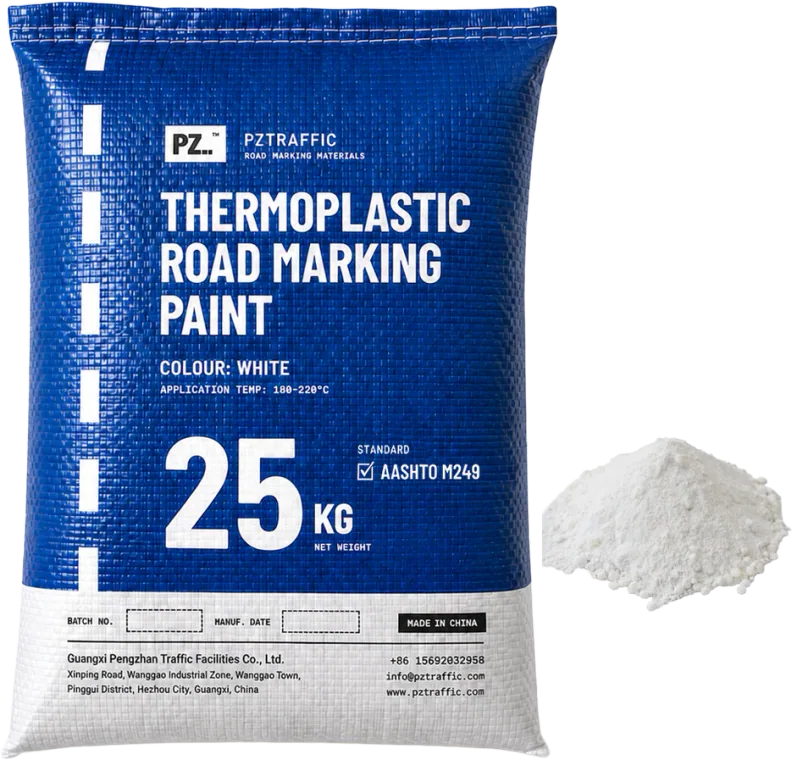
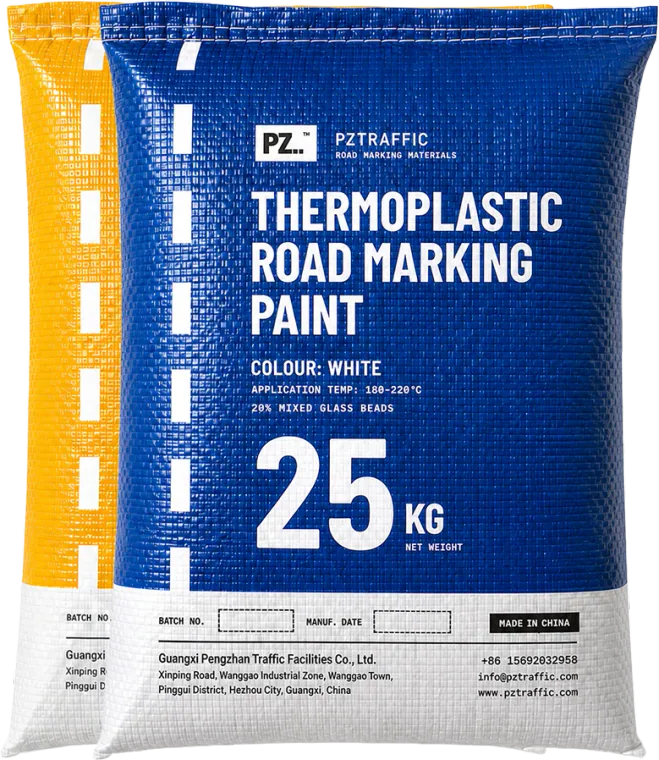
- 25 kg mỗi bao — túi EVA nóng chảy theo Phụ lục C của tiêu chuẩn, có thể kèm bao dệt ngoài thông thường để thuận tiện cho vận chuyển xuất khẩu; miệng bao được đóng kín theo yêu cầu tại điều 8.2.1.
- Ghi nhãn và lập chứng từ theo tiêu chuẩn — tên sản phẩm, số và loại tiêu chuẩn, khối lượng tịnh, số lô, ngày sản xuất và thời hạn lưu kho, kèm giấy chứng nhận phù hợp trong lô hàng.
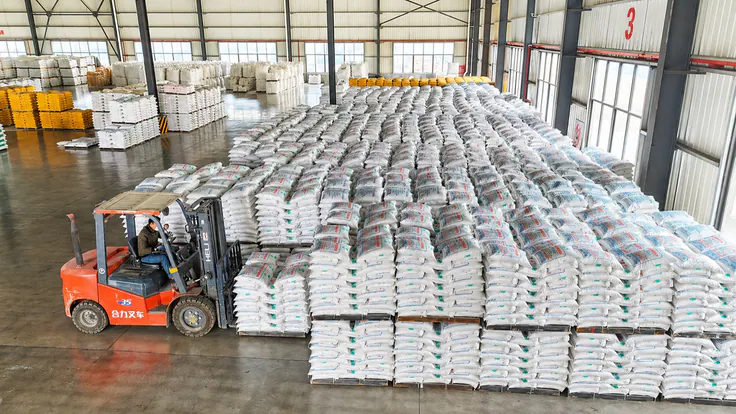
- Mỗi lô đều đạt kiểm tra tại phòng thí nghiệm nội bộ — độ chảy, điểm hóa mềm, màu sắc và thời gian khô không dính bánh xe — trước khi được xếp kho chờ giao hàng, đồng thời giao kèm COA.
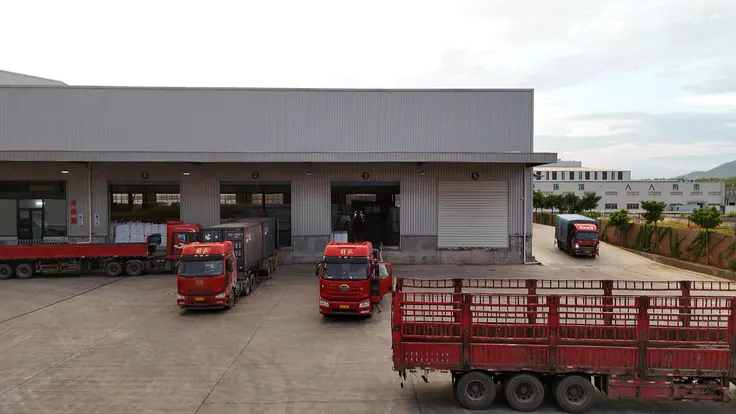
- Xuất hàng từ Cảng Qinzhou — đến Đông Nam Á trong 5–15 ngày, đến châu Phi và châu Mỹ trung bình ~30 ngày. Áp dụng điều kiện thương mại EXW / FOB / CIF.
- Hạt rắc bề mặt được ghép trong cùng container — một chuyến hàng, một bộ chứng từ, sẵn sàng cho quy trình rắc hai lượt theo yêu cầu của bảng quy cách.
Sản Phẩm Kết Hợp
Câu Hỏi Khi Mua Hàng
Q-01Our tender just says “JT/T 280 hot-melt” — what do we get?
The current edition, JT/T 280-2022, hot-melt reflective type — which means at least 30% premix glass beads by mass. Be aware that the 2004 edition allowed an “ordinary” unbeaded hot-melt that the 2022 revision deleted: if a competing offer is cheaper because it carries few or no premix beads, it is being quoted against a dead text. Ask every supplier to state the edition and the bead content, then compare.
Q-02What is the melt-in EVA bag about?
JT/T 280-2022 requires hot-melt paint to be packed in a dedicated EVA sack that is thrown into the preheater whole — the stirred melt dissolves the film within about 3 minutes at 140 °C. The crew never opens a bag, there is no powder dust at the kettle and no bag waste on site. State at order whether your project wants the melt-in route; a woven outer bag can be added for rough export handling.
Q-03Can you supply the other colours in the standard?
White and yellow are the running colours, and the 2022 edition defines ten — including orange, red, green, blue, grey and black — with chromaticity boxes and luminance factors for each. If your project needs a colour beyond white and yellow, ask: coloured formulations are quoted per order against the same Table 2 coordinates.
Q-04Which trade terms do you support?
We can provide EXW, FOB, CIF services, etc.
Nhận Báo Giá Trong Vòng 24 Giờ
Vui lòng điền biểu mẫu bên dưới; chúng tôi sẽ liên hệ với bạn.