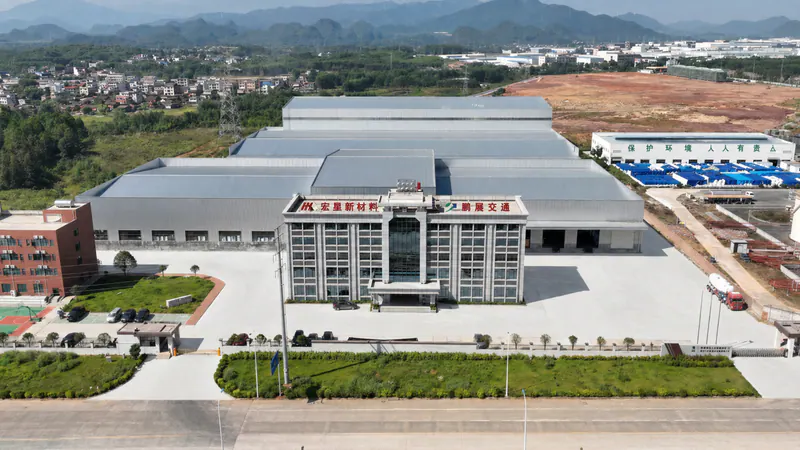
Peinture thermoplastique de marquage routier JT/T 280
JT/T 280 est la spécification chinoise du secteur des transports pour les peintures de marquage de chaussée — le texte qui sous-tend le plus grand réseau autoroutier du monde, réédité en 2022 avec un seuil renforcé : la peinture à chaud doit désormais contenir au moins 30% de microbilles de verre prémélangées. C’est la norme avec laquelle nous avons grandi et celle que citent les projets réalisés par des entreprises chinoises dans le monde entier. Ce produit est fabriqué conformément à JT/T 280-2022, type réfléchissant à chaud.
- NOM DU PRODUITPeinture thermoplastique de marquage routier JT/T 280
- NORMEJT/T 280-2022 — à chaud, type réfléchissant
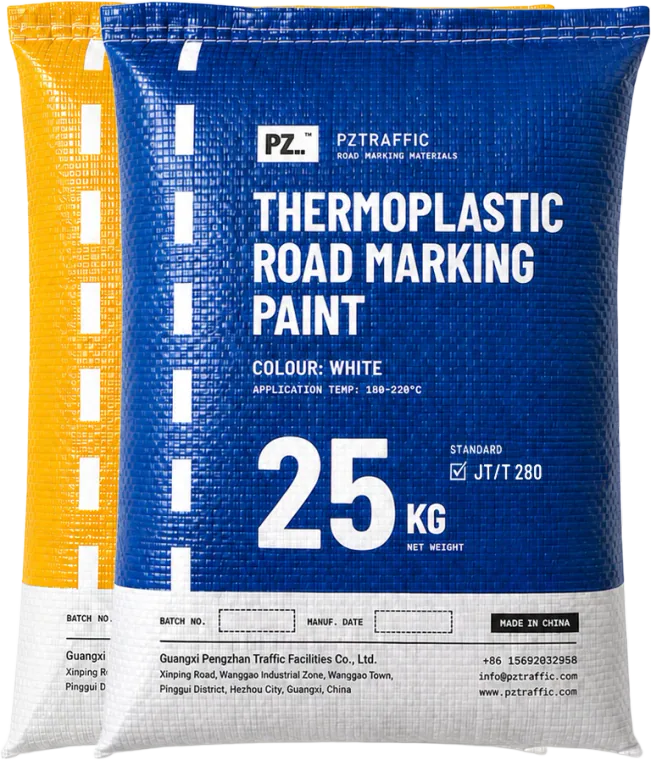
- CONDITIONNEMENT25 kg / sac
- MICROBILLES DE VERREPrémélange ≥ 30% — seuil minimal obligatoire de l’édition 2022
- COULEURBlanc / jaune · 10 couleurs définies dans la norme
- POINT DE RAMOLLISSEMENT100 – 140 °C
- TEMPS DE SÉCHAGE SANS TRACE≤ 5 min
- LIEU D’ORIGINEGuangxi, Chine
Exigences de JT/T 280-2022
JT/T 280 est publiée par le ministère chinois des Transports et couvre toutes les familles de peintures de marquage — à chaud, solvantées, bicomposants et à l’eau. L’édition 2022 a remplacé JT/T 280-2004 le 9 décembre 2022. Tout ce qui suit reprend le texte de 2022 pour la famille à chaud, qui correspond à ce produit.
The 2022 edition raised the floor
Under the 2004 edition a factory could sell an “ordinary” hot-melt with no beads in the mix. The 2022 revision deleted that product outright — hot-melt now exists in exactly two types, and both must carry premix glass beads:
| Type | Premix glass beads | Form |
|---|---|---|
| Reflective (反光型) | ≥ 30% by mass, roundness per GB/T 24722 | Flat lines — this product |
| Raised / vibration (突起型) | ≥ 30% by mass | Profiled lines that rumble under the wheel |
The practical consequence: a “JT/T 280 hot-melt” offer with 10% or 20% beads — or none — is being quoted against a standard that no longer exists. If a tender written before 2023 still cites the 2004 edition, ask which text governs before comparing prices; the bead content alone moves the cost significantly.
Performance requirements — Table 3, reflective type
| Property | Requirement |
|---|---|
| Density | 1.8 – 2.3 g/cm³ |
| Softening point | 100 – 140 °C |
| No-track drying time | ≤ 5 min |
| Compressive strength | ≥ 12.0 MPa at 23 °C · ≥ 2.0 MPa at 60 °C |
| Abrasion loss | ≤ 80 mg |
| Low-temperature crack resistance | 3 cycles of −10 °C (4 h) / room temp (4 h) — no cracks |
| Heating stability | 4 h held at 200 ± 10 °C — no yellowing, scorching or clumping; colour stays within the standard’s chromaticity boxes |
| Fluidity | 90 ± 5 mm²/g |
| Thermal deformation resistance | ≥ 90% (60 °C, 50 kPa, 1 h) |
| Total organic content | ≥ 19.0% |
| Luminance factor | White ≥ 0.80 · yellow ≥ 0.48 (Table 2 coordinates) |
| Harmful substances | Per JT/T 1326-2020, the marking-material limits standard |
Two of these are worth reading twice. The double compressive test — cold and at 60 °C — is aimed at hot climates, where a line that is hard in the lab can still track and deform under summer traffic. And the 200 °C heating-stability hold simulates the kettle: four hours at working temperature without scorching or drifting off colour is what separates a line that stays white from one that yellows the day it is laid.
The recipe’s inputs are specified too
Where BS 3262 and AASHTO M249 mostly test the finished powder, JT/T 280-2022 goes a level deeper and writes normative specs for the raw materials themselves — Appendix A for the resin, Appendix B for the polyethylene wax:
| Input | Key requirements (2022 text) |
|---|---|
| Resin — C5 petroleum or rosin | Softening point ≥ 100 °C · Gardner colour ≤ 5.0 · melt viscosity ≤ 200 mPa·s at 200 °C · ash ≤ 0.1% · 4 h at 200 °C without darkening |
| Polyethylene wax | Softening point ≥ 100 °C · Gardner colour ≤ 5.0 · melt viscosity ≤ 100 mPa·s at 150 °C · needle penetration ≤ 10 (25 °C, 100 g) · ash ≤ 0.1% |
| Premix glass beads | Content ≥ 30% · gradation and roundness per GB/T 24722 |
This is the audit-the-inputs philosophy the Chinese network runs on, and it suits a factory like ours: the resin and wax arrive with their own test numbers, the mix leaves with the batch COA, and both paper trails point at the same standard.
The bag melts into the kettle
The most distinctive clause in the 2022 edition is the packaging: hot-melt paint shall be packed in a dedicated EVA sack (clause 8.2.1, Appendix C) that goes into the preheater with the paint. At 140 °C the stirred melt dissolves the whole bag within 3 minutes — no cutting, no emptying, no dust at the kettle, no pile of used bags on the roadside. The same film still has to survive logistics: 4 h at 90 °C without sticking, a 2.5 m stack for three days, a 2 m drop, all without splitting. Type I single-layer sacks hold 25.0 kg. Tell us at order whether your project runs the melt-in route — export orders that prefer a conventional woven outer bag can have one over the EVA liner.
JT/T 280, BS 3262, AASHTO M249 — which to cite
| JT/T 280-2022 | BS 3262 | AASHTO M249 | |
|---|---|---|---|
| Premix glass beads | ≥ 30% | ≥ 20% (reflectorized) | 30 – 40% |
| Who cites it | China’s network; Chinese-contracted projects abroad | UK-legacy markets — Middle East, SE Asia, Africa | US-influenced markets |
| Distinctive feature | Input specs + melt-in EVA bag | The long-standing trade default | Named binder recipe |
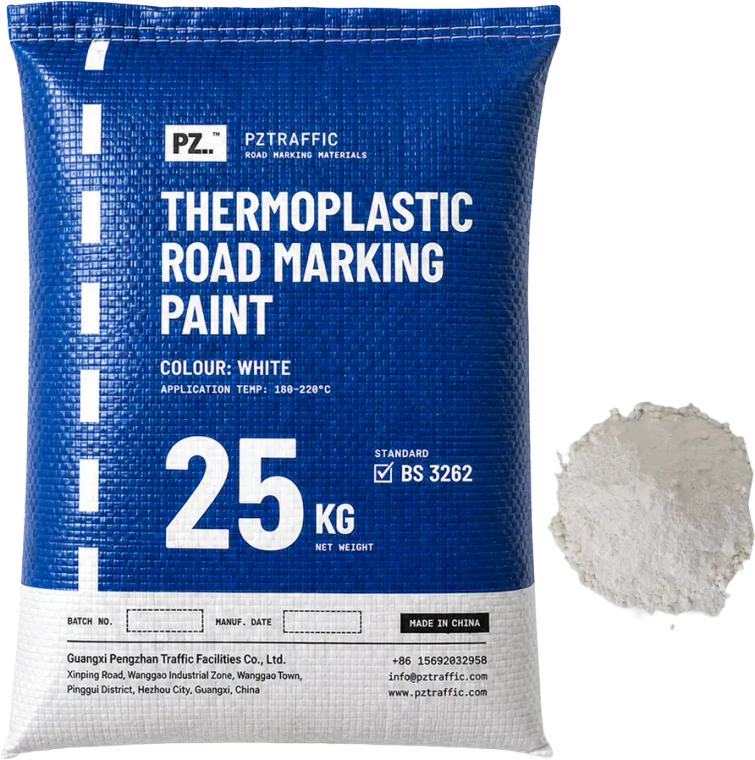
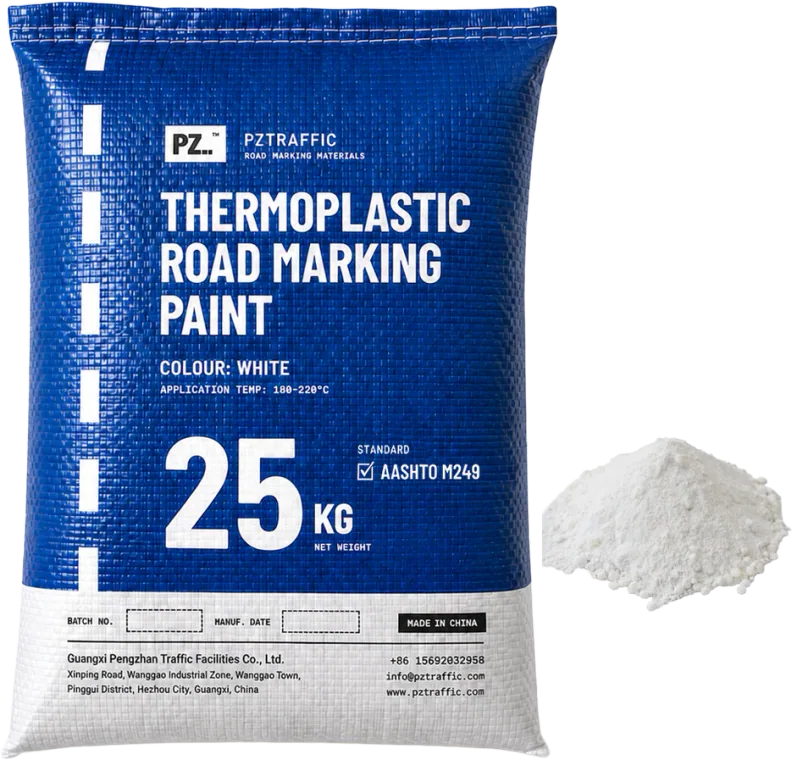
On bead content the three standards agree more than they differ — the JT/T 280 floor of 30% sits inside the AASHTO band and above the British one. If your engineer is a Chinese contractor, the tender almost certainly says JT/T 280 and this is the page to quote from; for BS or AASHTO texts, see the related products below. Either way, name the edition year in the contract.
De notre ligne à votre port
- 25 kg par sac — sacs EVA fusibles conformes à l’Annexe C de la norme, avec sac extérieur tissé conventionnel disponible pour la manutention export ; fermeture hermétique conforme à la clause 8.2.1.
- Marqués et documentés conformément à la norme — nom du produit, numéro et type de norme, poids net, numéro de lot, date et durée de stockage, avec le certificat de conformité dans l’expédition.
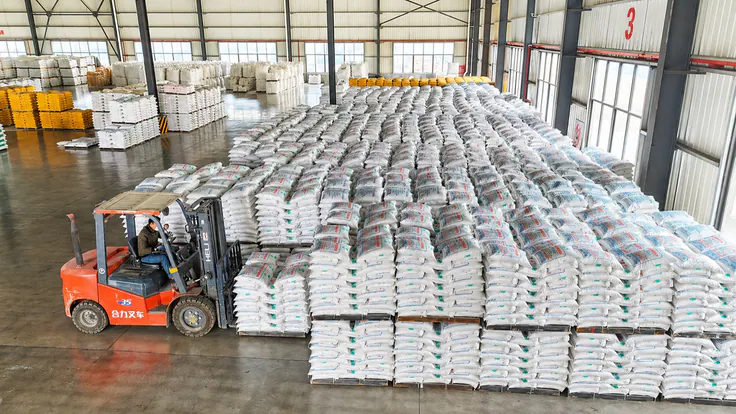
- Chaque lot est validé par notre laboratoire interne — fluidité, point de ramollissement, couleur et temps de séchage sans trace — avant la palettisation pour chargement, puis expédié avec son COA.
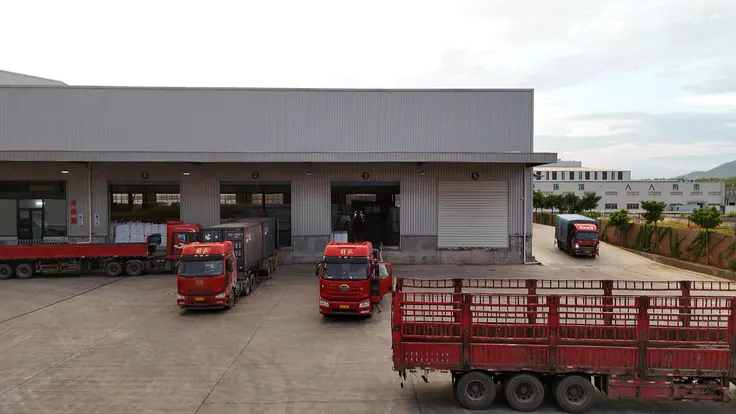
- Expédition depuis le port de Qinzhou — Livraison en Asie du Sud-Est sous 5–15 jours, et en Afrique et dans les Amériques sous ~30 jours en moyenne. Conditions commerciales EXW / FOB / CIF.
- Les microbilles de saupoudrage sont chargées dans le même conteneur — une seule expédition, un seul jeu de documents, prête pour le double saupoudrage demandé par la fiche technique.
À associer avec
Questions d’achat
Q-01Our tender just says “JT/T 280 hot-melt” — what do we get?
The current edition, JT/T 280-2022, hot-melt reflective type — which means at least 30% premix glass beads by mass. Be aware that the 2004 edition allowed an “ordinary” unbeaded hot-melt that the 2022 revision deleted: if a competing offer is cheaper because it carries few or no premix beads, it is being quoted against a dead text. Ask every supplier to state the edition and the bead content, then compare.
Q-02What is the melt-in EVA bag about?
JT/T 280-2022 requires hot-melt paint to be packed in a dedicated EVA sack that is thrown into the preheater whole — the stirred melt dissolves the film within about 3 minutes at 140 °C. The crew never opens a bag, there is no powder dust at the kettle and no bag waste on site. State at order whether your project wants the melt-in route; a woven outer bag can be added for rough export handling.
Q-03Can you supply the other colours in the standard?
White and yellow are the running colours, and the 2022 edition defines ten — including orange, red, green, blue, grey and black — with chromaticity boxes and luminance factors for each. If your project needs a colour beyond white and yellow, ask: coloured formulations are quoted per order against the same Table 2 coordinates.
Q-04Which trade terms do you support?
We can provide EXW, FOB, CIF services, etc.
Recevez un devis sous 24 heures
Veuillez remplir le formulaire ci-dessous et nous vous contacterons.