JT/T 280 Thermoplastic Road Marking Paint
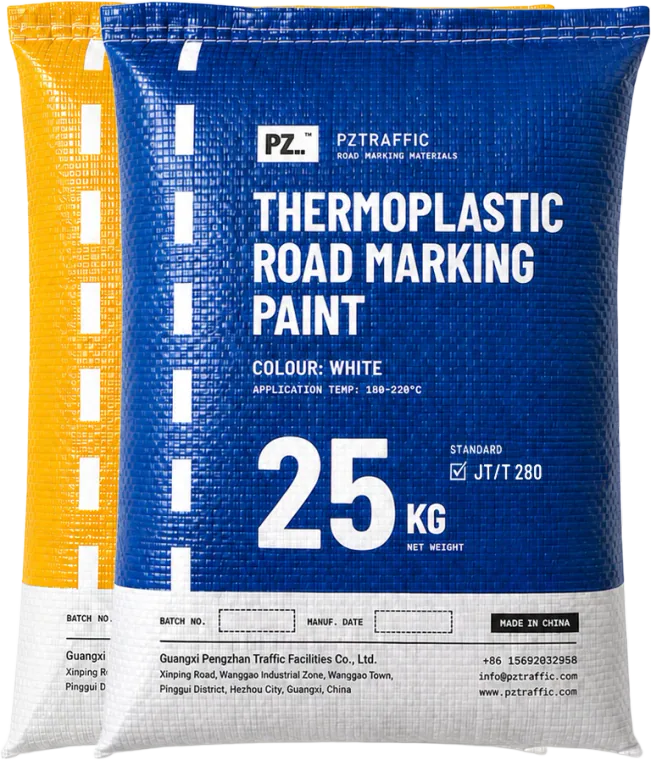
JT/T 280 is China’s transport-industry specification for pavement marking paint — the text behind the world’s largest expressway network, reissued in 2022 with a harder floor: hot-melt paint must now carry at least 30% premix glass beads. It is the standard we grew up on, and the one Chinese-contracted projects cite worldwide. This product is made to meet JT/T 280-2022, hot-melt reflective type.
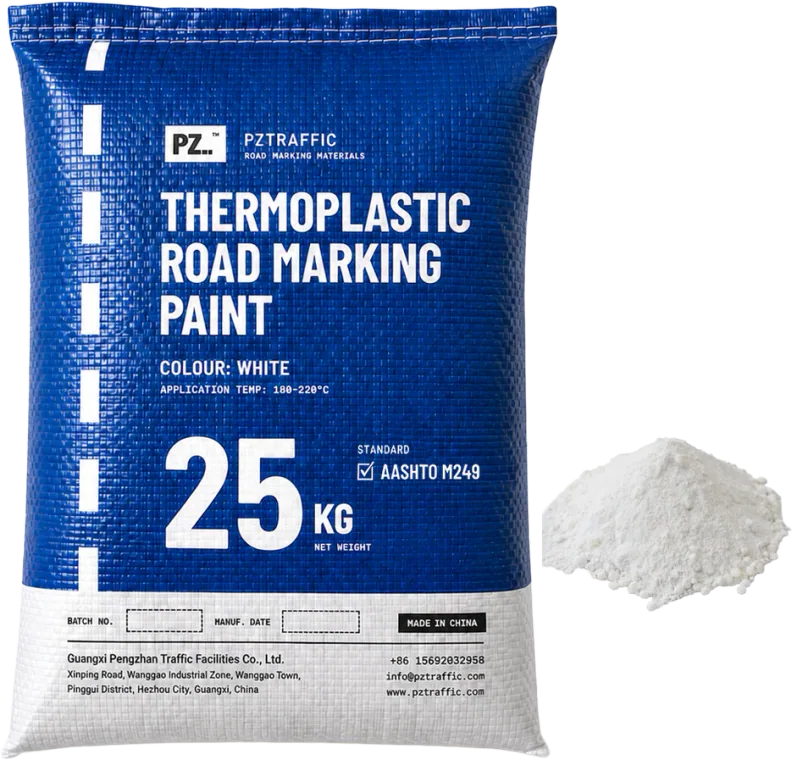
- PRODUCT NAMEJT/T 280 thermoplastic road marking paint
- STANDARDJT/T 280-2022 — hot-melt, reflective type
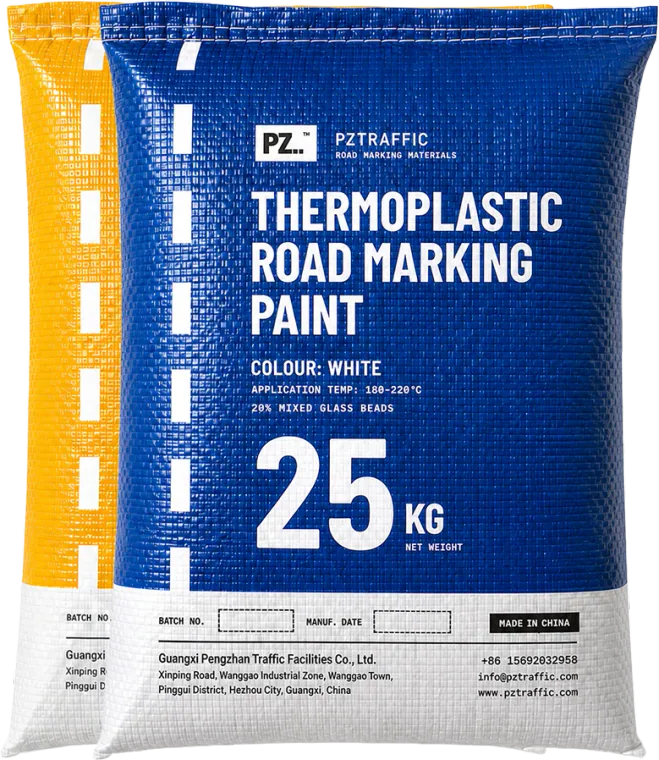
- PACKING25 kg / bag
- GLASS BEADSPremix ≥ 30% — the 2022 edition's mandatory floor
- COLOURWhite / yellow · 10 colours defined in the standard
- SOFTENING POINT100 – 140 °C
- NO-TRACK DRY TIME≤ 5 min
- PLACE OF ORIGINGuangxi, China
What JT/T 280-2022 Requires
JT/T 280 is issued by China’s Ministry of Transport and covers every family of marking paint — hot-melt, solvent, two-component and waterborne. The 2022 edition replaced JT/T 280-2004 on 9 December 2022. Everything below quotes the 2022 text for the hot-melt family, which is what this product is.
The 2022 edition raised the floor
Under the 2004 edition a factory could sell an “ordinary” hot-melt with no beads in the mix. The 2022 revision deleted that product outright — hot-melt now exists in exactly two types, and both must carry premix glass beads:
| Type | Premix glass beads | Form |
|---|---|---|
| Reflective (反光型) | ≥ 30% by mass, roundness per GB/T 24722 | Flat lines — this product |
| Raised / vibration (突起型) | ≥ 30% by mass | Profiled lines that rumble under the wheel |
The practical consequence: a “JT/T 280 hot-melt” offer with 10% or 20% beads — or none — is being quoted against a standard that no longer exists. If a tender written before 2023 still cites the 2004 edition, ask which text governs before comparing prices; the bead content alone moves the cost significantly.
Performance requirements — Table 3, reflective type
| Property | Requirement |
|---|---|
| Density | 1.8 – 2.3 g/cm³ |
| Softening point | 100 – 140 °C |
| No-track drying time | ≤ 5 min |
| Compressive strength | ≥ 12.0 MPa at 23 °C · ≥ 2.0 MPa at 60 °C |
| Abrasion loss | ≤ 80 mg |
| Low-temperature crack resistance | 3 cycles of −10 °C (4 h) / room temp (4 h) — no cracks |
| Heating stability | 4 h held at 200 ± 10 °C — no yellowing, scorching or clumping; colour stays within the standard’s chromaticity boxes |
| Fluidity | 90 ± 5 mm²/g |
| Thermal deformation resistance | ≥ 90% (60 °C, 50 kPa, 1 h) |
| Total organic content | ≥ 19.0% |
| Luminance factor | White ≥ 0.80 · yellow ≥ 0.48 (Table 2 coordinates) |
| Harmful substances | Per JT/T 1326-2020, the marking-material limits standard |
Two of these are worth reading twice. The double compressive test — cold and at 60 °C — is aimed at hot climates, where a line that is hard in the lab can still track and deform under summer traffic. And the 200 °C heating-stability hold simulates the kettle: four hours at working temperature without scorching or drifting off colour is what separates a line that stays white from one that yellows the day it is laid.
The recipe’s inputs are specified too
Where BS 3262 and AASHTO M249 mostly test the finished powder, JT/T 280-2022 goes a level deeper and writes normative specs for the raw materials themselves — Appendix A for the resin, Appendix B for the polyethylene wax:
| Input | Key requirements (2022 text) |
|---|---|
| Resin — C5 petroleum or rosin | Softening point ≥ 100 °C · Gardner colour ≤ 5.0 · melt viscosity ≤ 200 mPa·s at 200 °C · ash ≤ 0.1% · 4 h at 200 °C without darkening |
| Polyethylene wax | Softening point ≥ 100 °C · Gardner colour ≤ 5.0 · melt viscosity ≤ 100 mPa·s at 150 °C · needle penetration ≤ 10 (25 °C, 100 g) · ash ≤ 0.1% |
| Premix glass beads | Content ≥ 30% · gradation and roundness per GB/T 24722 |
This is the audit-the-inputs philosophy the Chinese network runs on, and it suits a factory like ours: the resin and wax arrive with their own test numbers, the mix leaves with the batch COA, and both paper trails point at the same standard.
The bag melts into the kettle
The most distinctive clause in the 2022 edition is the packaging: hot-melt paint shall be packed in a dedicated EVA sack (clause 8.2.1, Appendix C) that goes into the preheater with the paint. At 140 °C the stirred melt dissolves the whole bag within 3 minutes — no cutting, no emptying, no dust at the kettle, no pile of used bags on the roadside. The same film still has to survive logistics: 4 h at 90 °C without sticking, a 2.5 m stack for three days, a 2 m drop, all without splitting. Type I single-layer sacks hold 25.0 kg. Tell us at order whether your project runs the melt-in route — export orders that prefer a conventional woven outer bag can have one over the EVA liner.
JT/T 280, BS 3262, AASHTO M249 — which to cite
| JT/T 280-2022 | BS 3262 | AASHTO M249 | |
|---|---|---|---|
| Premix glass beads | ≥ 30% | ≥ 20% (reflectorized) | 30 – 40% |
| Who cites it | China’s network; Chinese-contracted projects abroad | UK-legacy markets — Middle East, SE Asia, Africa | US-influenced markets |
| Distinctive feature | Input specs + melt-in EVA bag | The long-standing trade default | Named binder recipe |
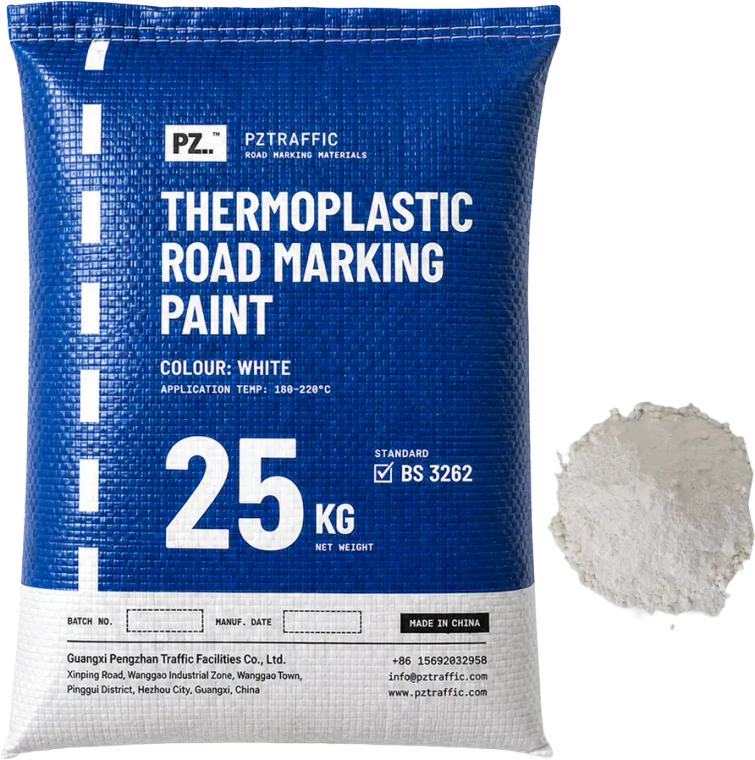
On bead content the three standards agree more than they differ — the JT/T 280 floor of 30% sits inside the AASHTO band and above the British one. If your engineer is a Chinese contractor, the tender almost certainly says JT/T 280 and this is the page to quote from; for BS or AASHTO texts, see the related products below. Either way, name the edition year in the contract.
From Our Line to Your Port
- 25 kg per bag — melt-in EVA sacks per the standard’s Appendix C, with a conventional woven outer bag available for export handling; mouth sealed tight as clause 8.2.1 requires.
- Marked and documented per the standard — product name, standard number and type, net weight, batch number, date and storage period, with the conformity certificate in the shipment.
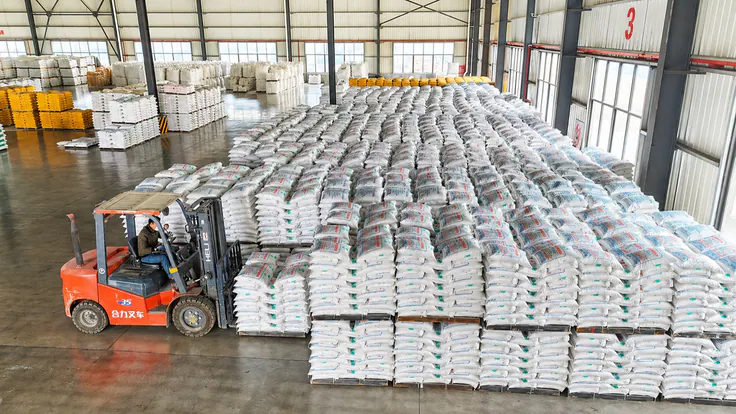
- Every batch clears the in-house lab — fluidity, softening point, colour and no-track time — before it is stacked for loading, and ships with its COA.
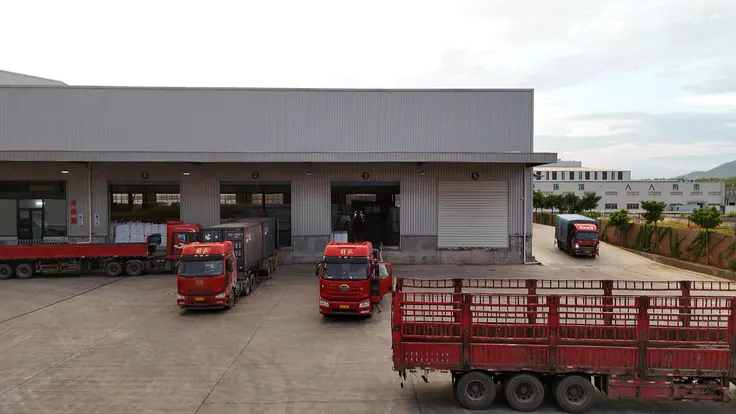
- Ships from Qinzhou Port — Southeast Asia in 5–15 days, Africa and the Americas in ~30 days on average. EXW / FOB / CIF trade terms.
- Drop-on beads load in the same container — one shipment, one set of documents, ready for the double-drop the spec sheet asks for.
Pairs With
Buying Questions
Q-01Our tender just says “JT/T 280 hot-melt” — what do we get?
The current edition, JT/T 280-2022, hot-melt reflective type — which means at least 30% premix glass beads by mass. Be aware that the 2004 edition allowed an “ordinary” unbeaded hot-melt that the 2022 revision deleted: if a competing offer is cheaper because it carries few or no premix beads, it is being quoted against a dead text. Ask every supplier to state the edition and the bead content, then compare.
Q-02What is the melt-in EVA bag about?
JT/T 280-2022 requires hot-melt paint to be packed in a dedicated EVA sack that is thrown into the preheater whole — the stirred melt dissolves the film within about 3 minutes at 140 °C. The crew never opens a bag, there is no powder dust at the kettle and no bag waste on site. State at order whether your project wants the melt-in route; a woven outer bag can be added for rough export handling.
Q-03Can you supply the other colours in the standard?
White and yellow are the running colours, and the 2022 edition defines ten — including orange, red, green, blue, grey and black — with chromaticity boxes and luminance factors for each. If your project needs a colour beyond white and yellow, ask: coloured formulations are quoted per order against the same Table 2 coordinates.
Q-04Which trade terms do you support?
We can provide EXW, FOB, CIF services, etc.
Get a Quote Within 24 Hours
Please fill out the form below and we will contact you.