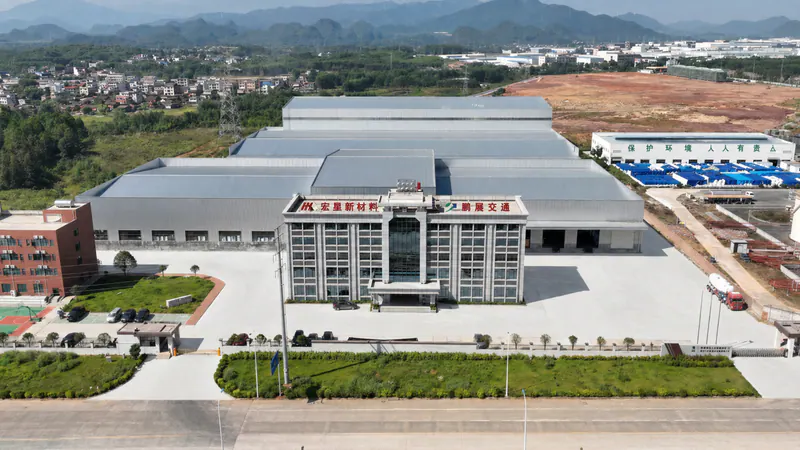
BS 3262 Thermoplastic Road Marking Paint
Hot-applied thermoplastic marking material manufactured within the BS 3262 formulation framework — the standard most cited in UK-influenced tenders across Africa, the Middle East and Southeast Asia. White and yellow, tuned line by line to your tender clause, with a datasheet and free samples before you commit.
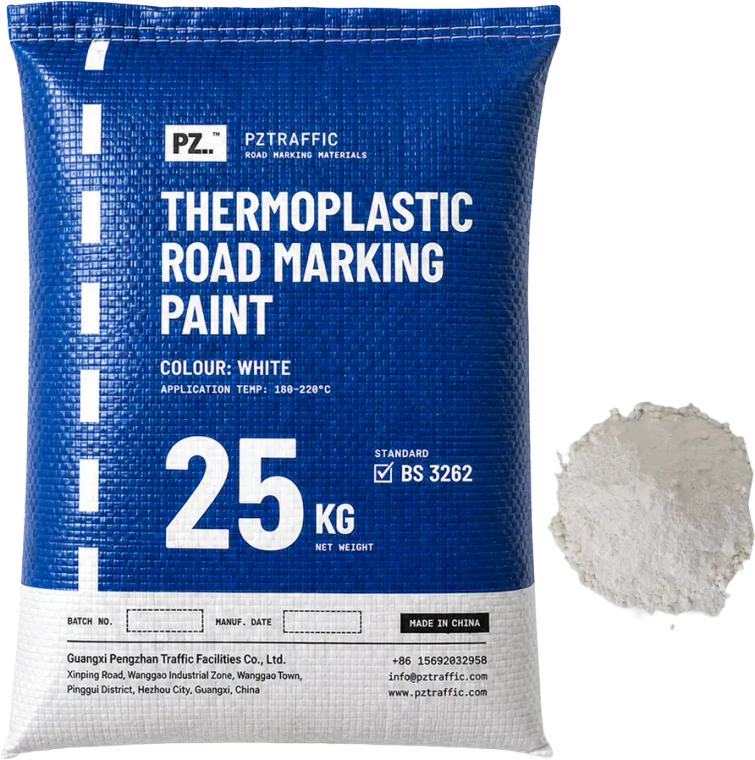
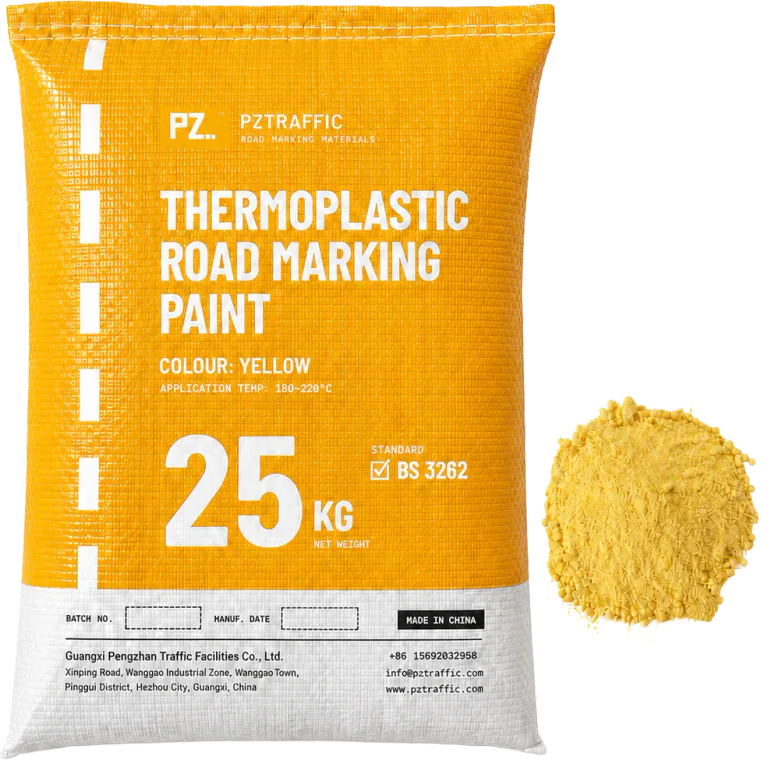
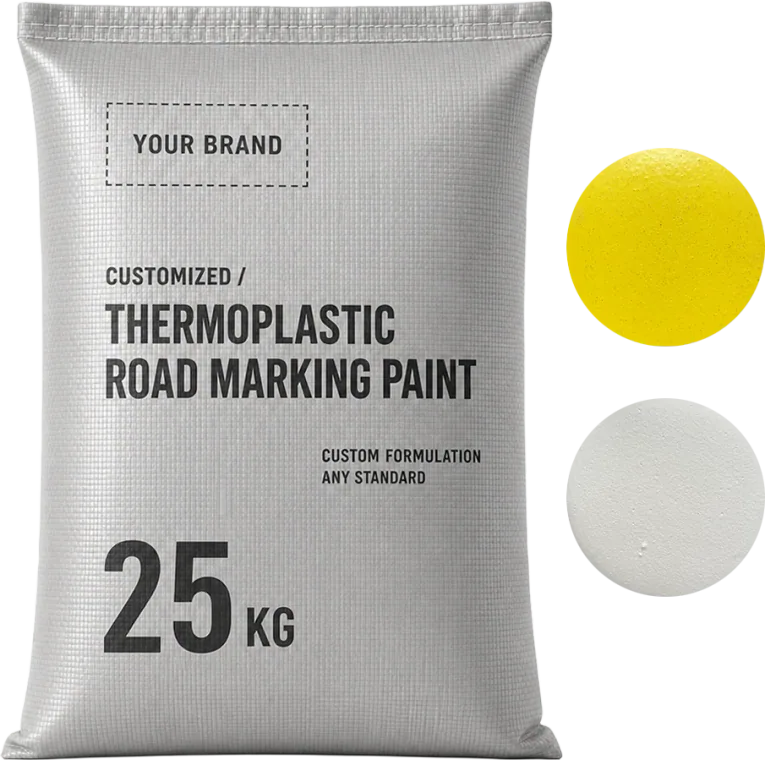
- PRODUCT NAMEThermoplastic road marking paint
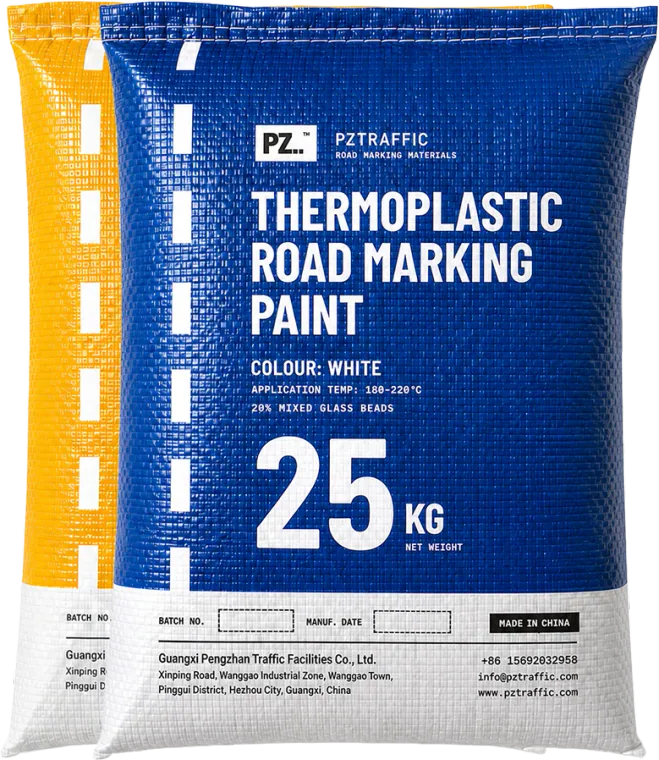
- PACKING25 kg / bag
- MAIN COMPOSITIONGlass beads ≥ 20% · 10% TiO₂ (white) · C5 petroleum resin binder ≥ 18%
- ALSO KNOWN ASHot melt road marking paint · hot-applied road line paint · thermoplastic pavement marking compound
- PLACE OF ORIGINGuangxi, China
- APPLICATIONHot-melt (melted and applied on site)
- FORMPowder
- DRYING TIME2–5 minutes on average
What BS 3262 Requires
BS 3262 is a set of three parts, two of which were withdrawn in 2000 — modern projects usually combine its formulation framework with EN performance clauses, and we formulate to both. The tables below quote the requirements of the original text.
Formulation — BS 3262-1:1989
| Composition (% of total mixture) | Requirement |
|---|---|
| Binder (resin + oil) | 20 ± 2% |
| Premixed solid glass beads (when reflectorized) | ≥ 20% |
| Aggregate + pigment + filler + premix beads, combined | 80 ± 2% |
The premix beads sit inside the 80 ± 2% total. White pigment must be anatase or rutile titanium dioxide to BS 1851 — the standard fixes the type, not a minimum content. The combined solids must pass a 2.80 mm sieve completely, with 65–95% passing 600 µm.
Finished-material requirements
| Property | White | Yellow |
|---|---|---|
| Softening point | ≥ 65°C | ≥ 65°C |
| Luminance factor, as manufactured | ≥ 70 | ≥ 50 |
| Luminance factor, remelted on site | ≥ 65 | ≥ 45 |
| Luminance factor after heat-stability test | ≥ 65 | ≥ 45 |
| Flow resistance (mean slump) | ≤ 25% | ≤ 25% |
| Laboratory skid resistance (pendulum) | ≥ 45 | ≥ 45 |
The heat-stability test stirs the material for six hours at 200°C or the declared maximum application temperature, whichever is lower. Luminance factor is a daytime whiteness figure — it is not the night-time retroreflectivity (RL) of EN 1436; if your tender sets an RL target, specify it separately and we formulate for it.
Application — BS 3262-3, still in force
| Binder system | Method | Thickness (excl. drop-on beads) |
|---|---|---|
| Synthetic resin | Screed | 2.0 – 5.0 mm |
| Spray (except yellow edge lines) | ≥ 1.5 mm | |
| Extrusion | 2.5 – 3.5 mm | |
| Gum / wood rosin | Screed | 3.0 – 5.0 mm |
| Spray (except yellow edge lines) | ≥ 2.0 mm | |
| Extrusion | 4.0 – 5.0 mm |
Lay on a dry surface above 5°C; concrete and polished-aggregate asphalt need a compatible primer. Line width tolerance is +10% / −5% of the specified width.
What BS 3262 actually requires — and what it doesn't
SEVEN CLAUSES COMMON IN TENDERS ARE NOT IN THE STANDARD'S TEXT. OUR ENGINEERS BREAK THE ORIGINAL DOWN, TABLE BY TABLE.
From Our Line to Your Port
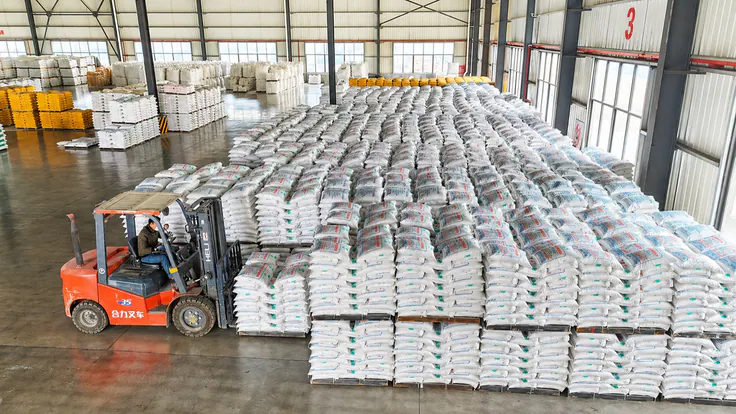
- 25 kg net PP woven bags — printed under the PZTRAFFIC brand, or under yours: OEM bag printing is welcome.
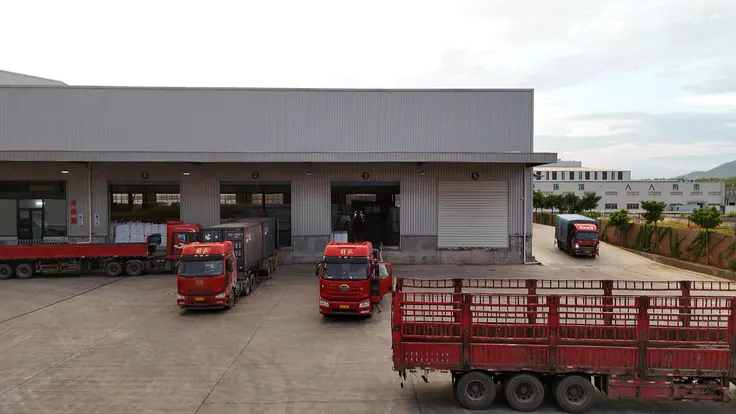
- Automated bagging and robot palletizing on the thermoplastic lines at our Hezhou base.
- Every batch clears the in-house lab before it is stacked for loading.
- Ships from Qinzhou Port — Southeast Asia in 5–15 days, Africa and the Americas in ~30 days on average. EXW / FOB / CIF trade terms.
- FORM E / ACFTA documentation available for ASEAN buyers.
Pairs With
Buying Questions
Q-01Can you provide samples?
Yes — free samples of 1–2 kg for any product. Whatever you pay for the sample and its freight is credited in full against your next purchase. Email info@pztraffic.com with the products and standards you need.
Q-02My tender asks for values that are not in BS 3262 — a higher softening point, a TiO₂ minimum, an RL target. Can you match them?
Yes. Clauses like softening point ≥ 95°C, TiO₂ ≥ 10% or an initial RL figure are project add-ons, not part of the standard’s original text — so they must be stated explicitly. Send us the tender clause and we formulate against it, answering with a datasheet that covers every line.
Q-03Do you supply the glass beads as well?
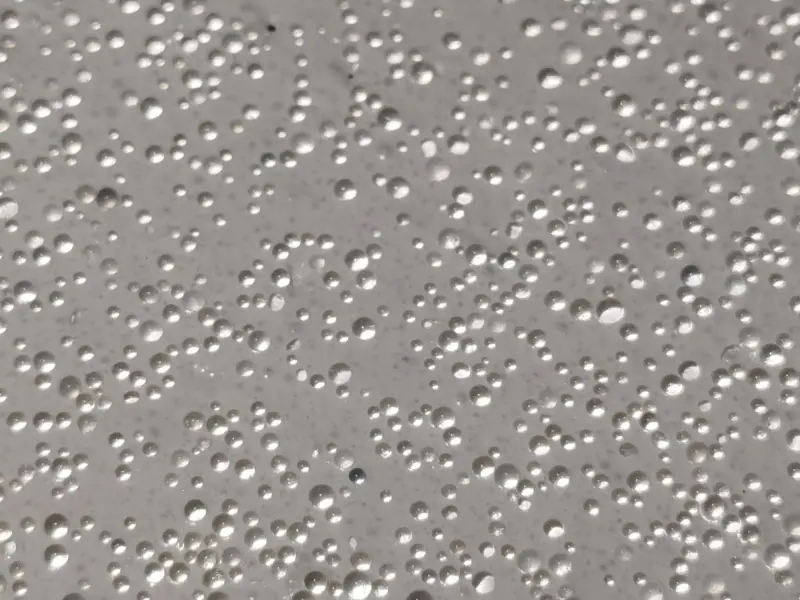
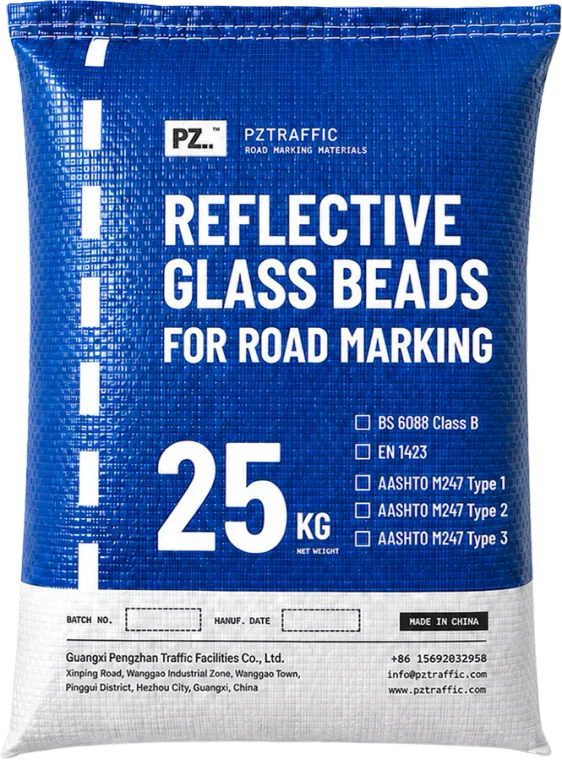
Yes, both forms. Premix beads can be built into the material at the plant — our 20% mixed glass beads variant matches the standard’s reflectorized formulation — and drop-on beads (BS 6088B, AASHTO M247 types) ship alongside the paint in the same container.
Q-04Which trade terms do you support?
We can provide EXW, FOB, CIF services, etc.
Get a Quote Within 24 Hours
Please fill out the form below and we will contact you.