Tinta termoplástica para marcação rodoviária EN 1436/EN 1871
Material termoplástico de marcação para concursos elaborados segundo o enquadramento europeu. A maioria dos compradores identifica o produto pela norma de desempenho que a marcação deve cumprir na estrada — EN 1436:2018 e as suas classes R / Q / S — enquanto o material é especificado pela EN 1871:2020.
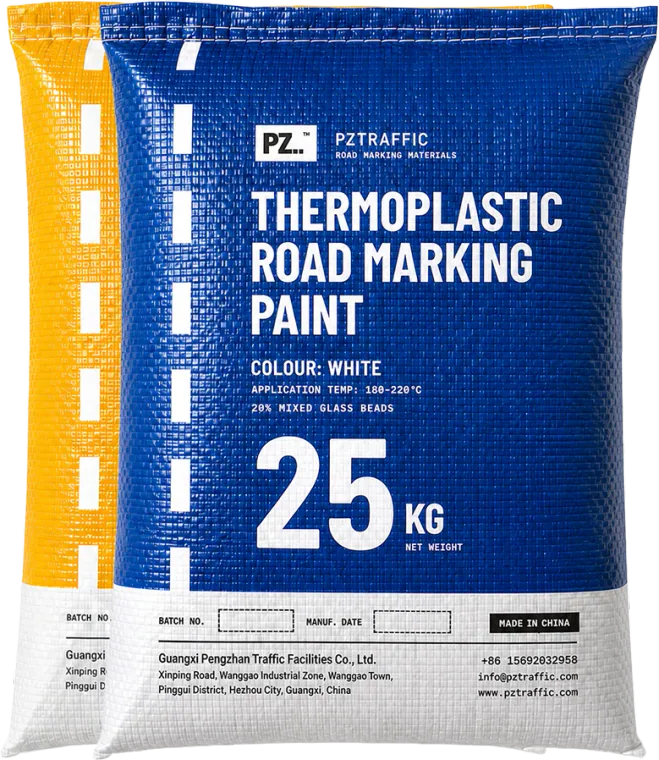
- NOME DO PRODUTOTinta termoplástica para marcação rodoviária
- EMBALAGEM25 kg / saco
- NORMASClasses de desempenho rodoviário EN 1436:2018 · propriedades do material EN 1871:2020
- TAMBÉM CONHECIDO COMOTinta de marcação rodoviária de fusão a quente · tinta de aplicação a quente para linhas rodoviárias · composto termoplástico para marcação de pavimentos
- ORIGEMGuangxi, China
- APLICAÇÃOFusão a quente (fundido e aplicado no local)
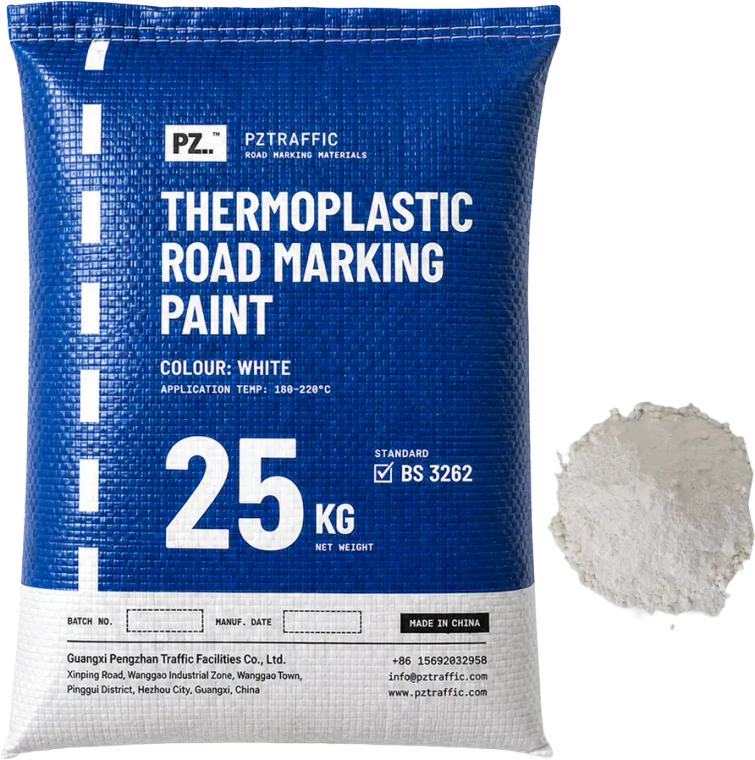
- FORMAPó
- TEMPO DE SECAGEM2–5 minutos em média
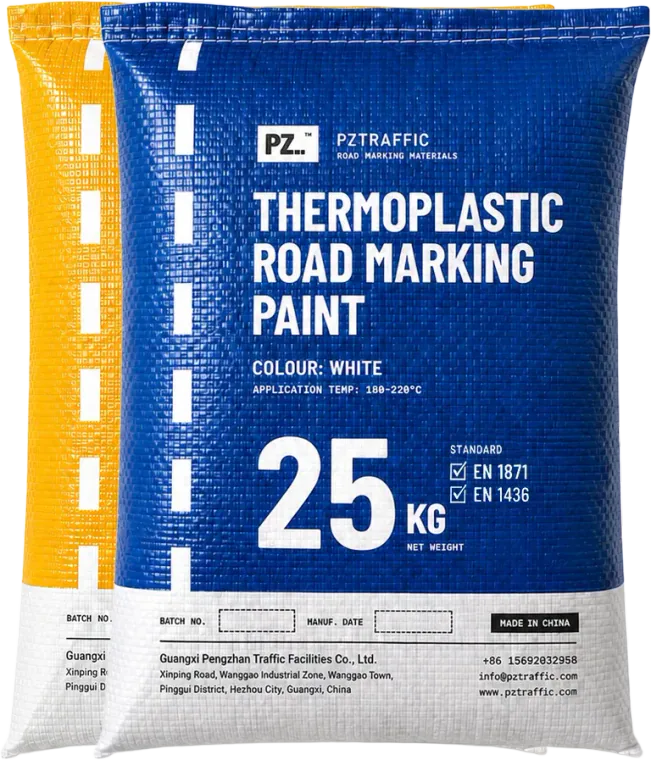
Como o enquadramento EN especifica o produto
Ao contrário da BS 3262 ou da AASHTO M 249, o sistema europeu divide a especificação em duas partes: a EN 1436 classifica o desempenho da marcação na estrada e a EN 1871 abrange as propriedades físicas do material em laboratório. Nenhuma define um único valor de aprovação/reprovação — ambas utilizam sistemas de classes escolhidos pelo concurso. Os valores abaixo reproduzem a EN 1436:2018; os resultados do nosso material face às classes escolhidas acompanham a ficha técnica de cada encomenda.
One material, two standards
| Standard | What it governs |
|---|---|
| EN 1436:2018 | Performance classes on the road — retroreflectivity, daytime visibility, colour and skid resistance. The standard tenders actually cite, and the one buyers search for |
| EN 1871:2020 | Laboratory physical properties of the marking material — paint, thermoplastic and cold plastic |
| EN 1824 | Road trials |
| EN 1423 / EN 1424 | Glass beads — drop-on / premix |
EN 1871 is the functional successor of BS 3262 Part 1 — the British formulation standard it declared obsolescent in 2000. Markets with a BS heritage often cite both in the same tender; we manufacture to either framework.
Night-time visibility — RL classes, EN 1436:2018
| Condition | Classes | Minimum RL steps (mcd·m⁻²·lx⁻¹) |
|---|---|---|
| Dry — permanent white | R2 – R5 | 100 / 150 / 200 / 300 |
| Dry — permanent yellow | R1 – R5 | 80 / 100 / 150 / 200 / 300 |
| Wet — 1 min after wetting | RW1 – RW6 | 25 / 35 / 50 / 75 / 100 / 150 |
| Rain — 20 mm/h continuous | RR1 – RR6 | 25 / 35 / 50 / 75 / 100 / 150 |
Class 0 in every family means no value requested. Type II markings are those with enhanced wet or rain performance; if your project does not need wet-night figures, the clean way to say so is an explicit RW0 / RR0.
Daytime visibility and skid resistance
| Property | Classes | Minimum steps |
|---|---|---|
| Qd — white on asphalt | Q2 – Q5 | 100 / 130 / 160 / 200 mcd·m⁻²·lx⁻¹ |
| Qd — white on concrete | Q3 – Q5 | 130 / 160 / 200 mcd·m⁻²·lx⁻¹ |
| Qd — yellow | Q1 – Q3 | 80 / 100 / 130 mcd·m⁻²·lx⁻¹ |
| Skid resistance (pendulum) | S1 – S5 | SRT 45 / 50 / 55 / 60 / 65 |
Daytime brightness may alternatively be specified by luminance factor β (B classes), and white/yellow chromaticity must fall inside the standard’s colour boxes. One trade-off to plan for: more drop-on beads push RL up, more anti-skid aggregate pushes SRT up — the two rarely peak together, so agree the class pair with the road owner before formulation.
Da nossa linha ao seu porto
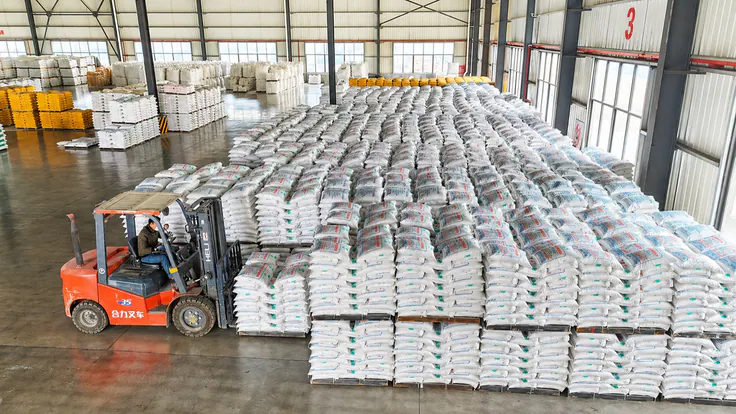
- Sacos tecidos de PP com 25 kg líquidos — impressos com a marca PZTRAFFIC ou com a sua: aceitamos impressão OEM nos sacos.
- Ensacamento automatizado e paletização robotizada nas linhas de termoplástico da nossa unidade de Hezhou.
- Cada lote é aprovado pelo laboratório interno antes de ser empilhado para carregamento.
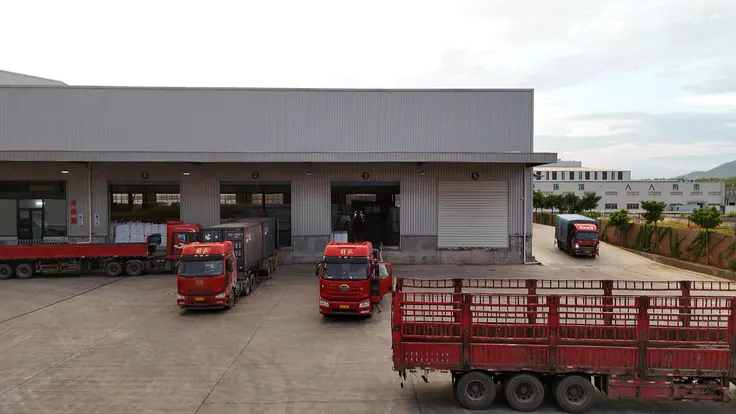
- Expedição a partir do Porto de Qinzhou — Sudeste Asiático em 5–15 dias; África e Américas em cerca de 30 dias, em média. Condições comerciais EXW / FOB / CIF.
- Documentação FORM E / ACFTA disponível para compradores da ASEAN.
Combina com
Perguntas de compra
Q-01Can you provide samples?
Yes — free samples of 1–2 kg for any product. Whatever you pay for the sample and its freight is credited in full against your next purchase. Email info@pztraffic.com with the products and standards you need.
Q-02Is EN 1871 the same thing as BS 3262?
They are relatives, not twins. EN 1871 is the European laboratory-property standard that succeeded BS 3262 Part 1 — the 2000 edition declared the British part obsolescent. Tenders in markets with a BS heritage often still cite BS 3262, sometimes both at once. We manufacture within either framework; specify whichever your tender names.
Q-03Which trade terms do you support?
We can provide EXW, FOB, CIF services, etc.
Receba um orçamento em 24 horas
Preencha o formulário abaixo e entraremos em contacto consigo.