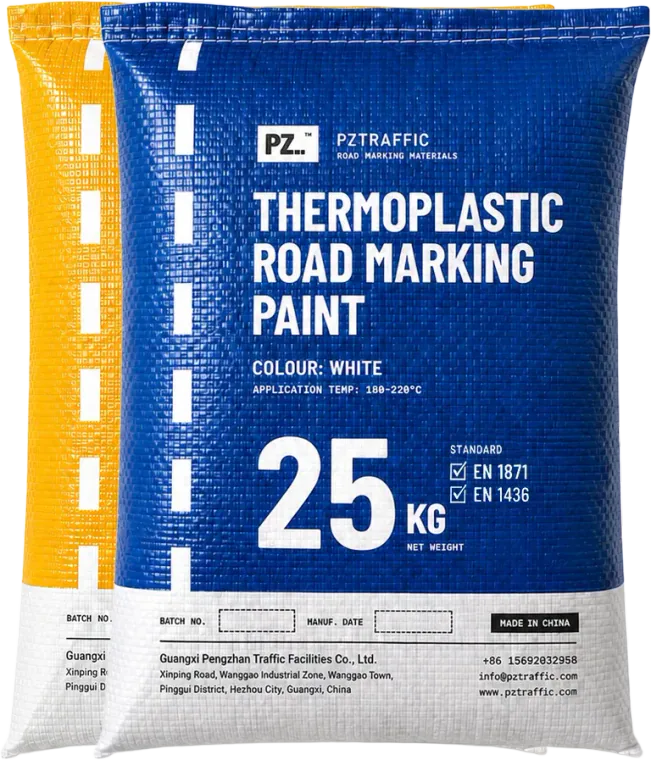
Rangi ya Thermoplastiki ya Alama za Barabarani ya EN 1436/EN 1871
Nyenzo ya thermoplastiki ya alama kwa zabuni zilizoandikwa kwa mfumo wa Ulaya. Wanunuzi wengi huijua bidhaa kupitia kiwango cha utendaji ambacho mstari unatakiwa kufikia barabarani — EN 1436:2018 na madaraja yake ya R / Q / S — ilhali nyenzo yenyewe hubainishwa kupitia EN 1871:2020.
- JINA LA BIDHAARangi ya thermoplastiki ya alama za barabarani
- UFUNGASHAJI25 kg / gunia
- VIWANGOMadaraja ya utendaji barabarani ya EN 1436:2018 · sifa za nyenzo za EN 1871:2020
- PIA HUITWARangi ya kuyeyushwa kwa joto ya alama za barabarani · rangi ya mistari ya barabara inayowekwa kwa joto · mchanganyiko wa thermoplastiki wa alama za lami
- MAHALI ILIPOTOKAGuangxi, China
- MATUMIZIKuyeyushwa kwa joto (inayeyushwa na kuwekwa eneo la kazi)
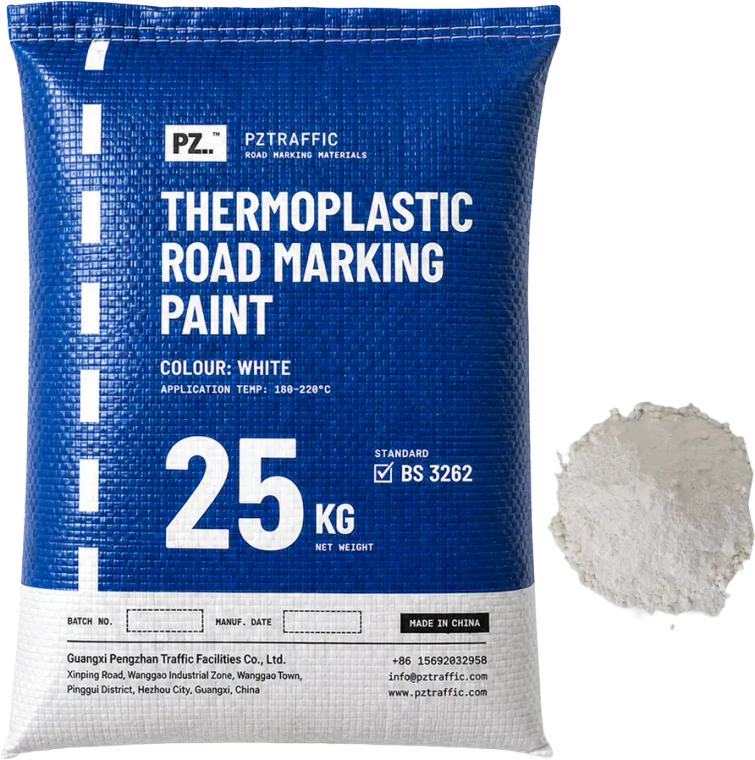
- HALIPoda
- MUDA WA KUKAUKADakika 2–5 kwa wastani
Jinsi Mfumo wa EN Unavyobainisha Vipimo
Tofauti na BS 3262 au AASHTO M 249, mfumo wa Ulaya hugawanya kazi katika sehemu mbili: EN 1436 hupanga kile ambacho mstari unapaswa kufanya barabarani, huku EN 1871 ikihusisha sifa za kimwili za nyenzo maabarani. Hakuna kiwango kinachoweka namba moja ya kufaulu au kufeli — yote ni mifumo ya madaraja ambayo zabuni huchagua. Thamani za madaraja zilizo hapa chini zimenukuliwa kutoka EN 1436:2018; vipimo vya nyenzo zetu dhidi ya madaraja uliyochagua huja kwenye karatasi ya data ya kila agizo.
One material, two standards
| Standard | What it governs |
|---|---|
| EN 1436:2018 | Performance classes on the road — retroreflectivity, daytime visibility, colour and skid resistance. The standard tenders actually cite, and the one buyers search for |
| EN 1871:2020 | Laboratory physical properties of the marking material — paint, thermoplastic and cold plastic |
| EN 1824 | Road trials |
| EN 1423 / EN 1424 | Glass beads — drop-on / premix |
EN 1871 is the functional successor of BS 3262 Part 1 — the British formulation standard it declared obsolescent in 2000. Markets with a BS heritage often cite both in the same tender; we manufacture to either framework.
Night-time visibility — RL classes, EN 1436:2018
| Condition | Classes | Minimum RL steps (mcd·m⁻²·lx⁻¹) |
|---|---|---|
| Dry — permanent white | R2 – R5 | 100 / 150 / 200 / 300 |
| Dry — permanent yellow | R1 – R5 | 80 / 100 / 150 / 200 / 300 |
| Wet — 1 min after wetting | RW1 – RW6 | 25 / 35 / 50 / 75 / 100 / 150 |
| Rain — 20 mm/h continuous | RR1 – RR6 | 25 / 35 / 50 / 75 / 100 / 150 |
Class 0 in every family means no value requested. Type II markings are those with enhanced wet or rain performance; if your project does not need wet-night figures, the clean way to say so is an explicit RW0 / RR0.
Daytime visibility and skid resistance
| Property | Classes | Minimum steps |
|---|---|---|
| Qd — white on asphalt | Q2 – Q5 | 100 / 130 / 160 / 200 mcd·m⁻²·lx⁻¹ |
| Qd — white on concrete | Q3 – Q5 | 130 / 160 / 200 mcd·m⁻²·lx⁻¹ |
| Qd — yellow | Q1 – Q3 | 80 / 100 / 130 mcd·m⁻²·lx⁻¹ |
| Skid resistance (pendulum) | S1 – S5 | SRT 45 / 50 / 55 / 60 / 65 |
Daytime brightness may alternatively be specified by luminance factor β (B classes), and white/yellow chromaticity must fall inside the standard’s colour boxes. One trade-off to plan for: more drop-on beads push RL up, more anti-skid aggregate pushes SRT up — the two rarely peak together, so agree the class pair with the road owner before formulation.
Kutoka Mstari Wetu hadi Bandari Yako
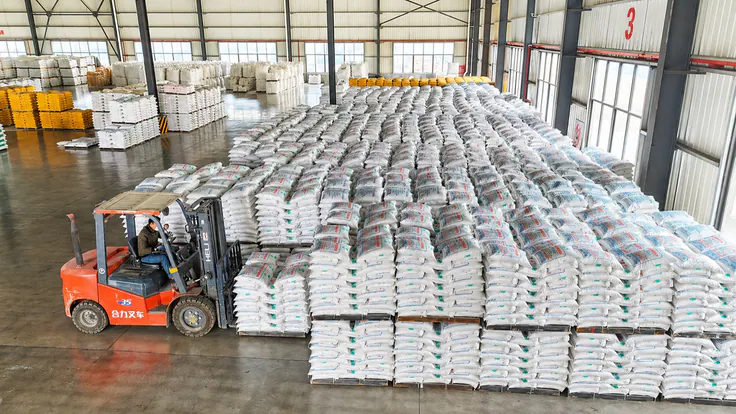
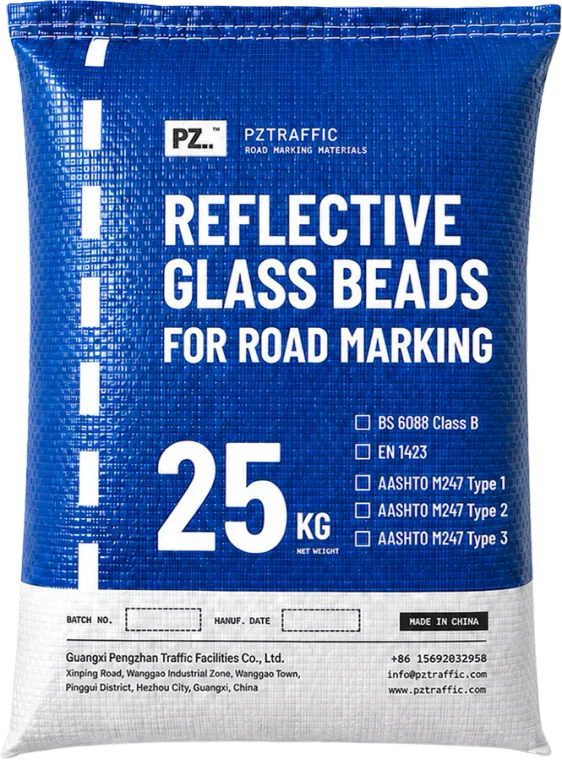
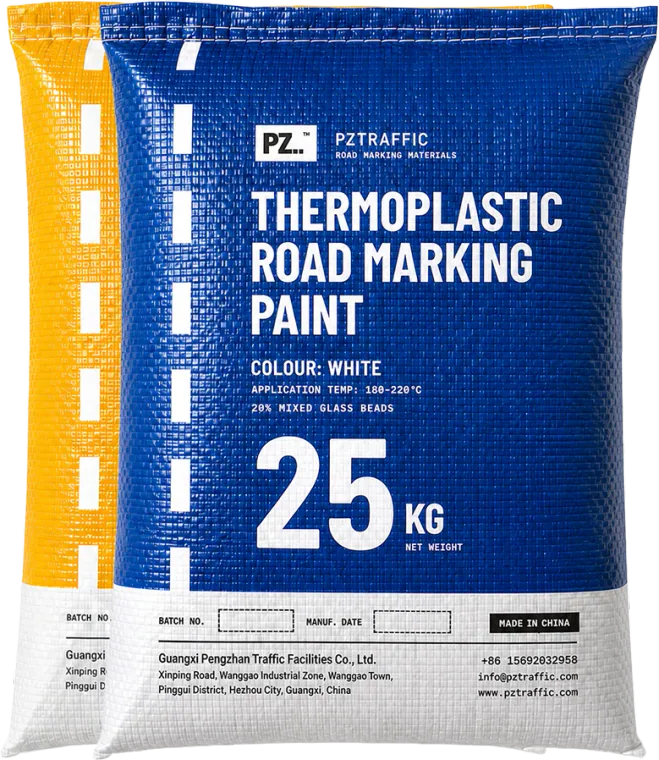
- Magunia ya PP yaliyofumwa yenye uzito halisi wa 25 kg — yamechapishwa kwa chapa ya PZTRAFFIC au chapa yako mwenyewe: uchapishaji wa magunia ya OEM unakaribishwa.
- Ufungaji wa kiotomatiki na upangaji kwenye paleti kwa roboti kwenye mistari ya thermoplastiki katika kituo chetu cha Hezhou.
- Kila bechi hupitishwa na maabara yetu ya ndani kabla ya kupangwa kwa ajili ya kupakiwa.
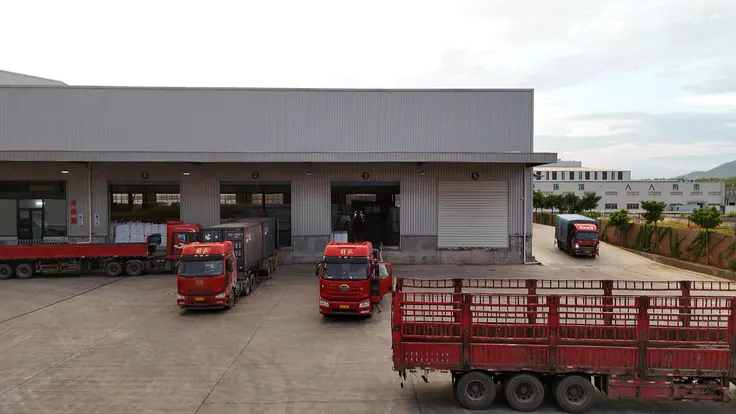
- Husafirishwa kutoka Bandari ya Qinzhou — Asia ya Kusini-Mashariki kwa siku 5–15, Afrika na Amerika kwa wastani wa siku ~30. Masharti ya biashara ya EXW / FOB / CIF.
- Nyaraka za FORM E / ACFTA zinapatikana kwa wanunuzi wa ASEAN.
Inaoana na
Maswali ya Ununuzi
Q-01Can you provide samples?
Yes — free samples of 1–2 kg for any product. Whatever you pay for the sample and its freight is credited in full against your next purchase. Email info@pztraffic.com with the products and standards you need.
Q-02Is EN 1871 the same thing as BS 3262?
They are relatives, not twins. EN 1871 is the European laboratory-property standard that succeeded BS 3262 Part 1 — the 2000 edition declared the British part obsolescent. Tenders in markets with a BS heritage often still cite BS 3262, sometimes both at once. We manufacture within either framework; specify whichever your tender names.
Q-03Which trade terms do you support?
We can provide EXW, FOB, CIF services, etc.
Pata Nukuu ya Bei ndani ya Saa 24
Tafadhali jaza fomu iliyo hapa chini nasi tutawasiliana nawe.